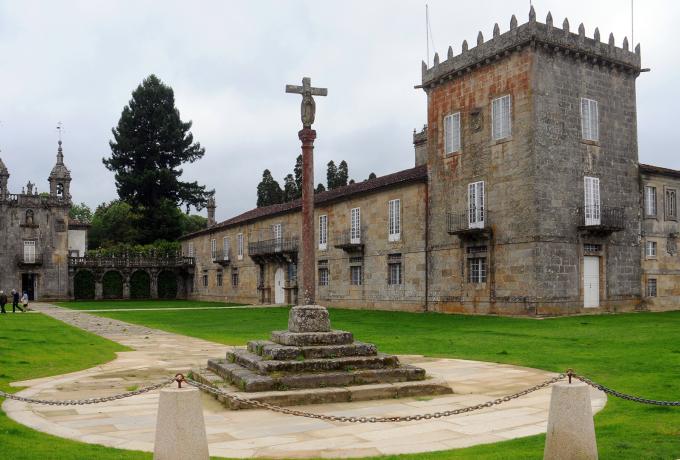
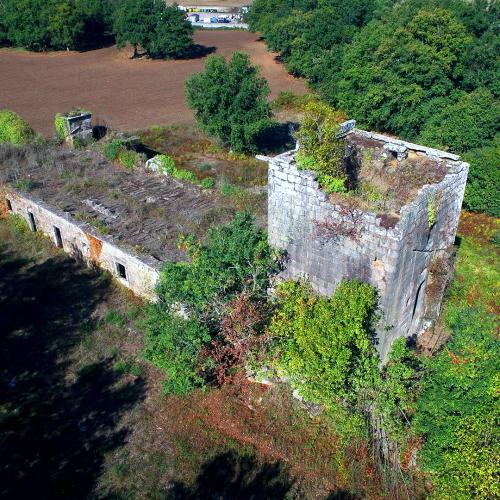
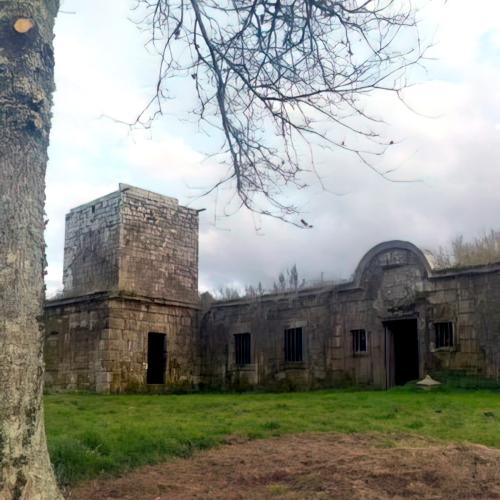
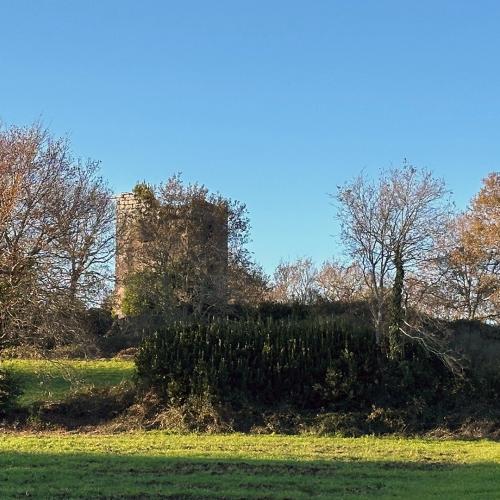
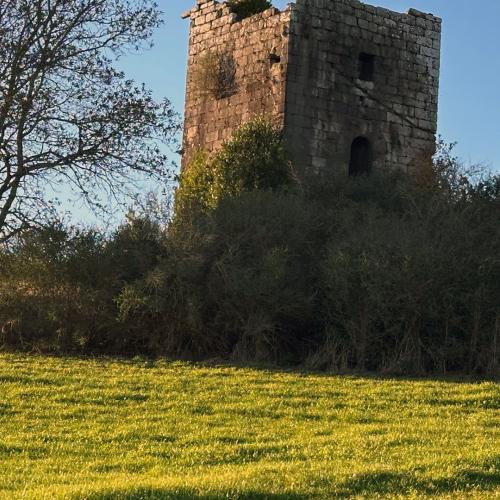
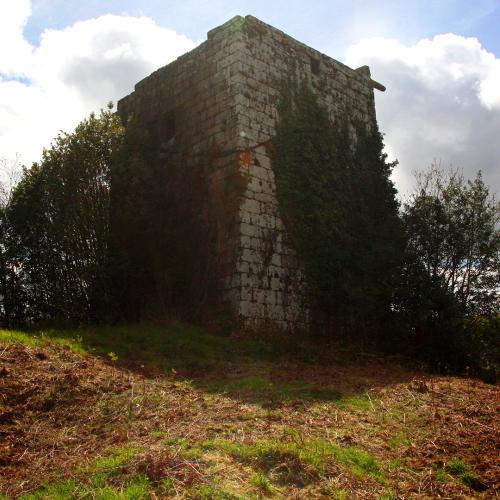
The Tower of Guimarei, located in the municipality of A Estrada, is a surviving remnant of a 12th-century medieval castle that was destroyed during the Irmandiño revolts of the 15th century, as happened with many Galician fortresses. With a square plan and about 15 metres in height, the tower preserves thick walls built with well-cut stone blocks, arrow slits on all sides and, on the upper corners, carved stone figures resembling cannons or gargoyles. These elements are typical of medieval defensive architecture and allow visitors to easily recognise its original defensive character. Although partially ruined, the tower remains a symbol of feudal power and of the military history of the region.
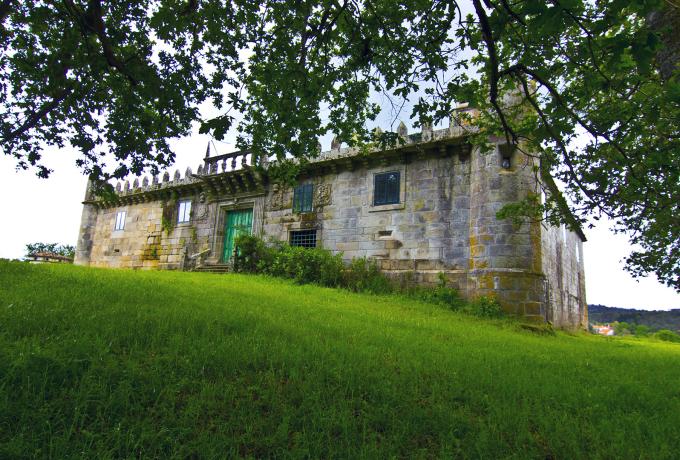
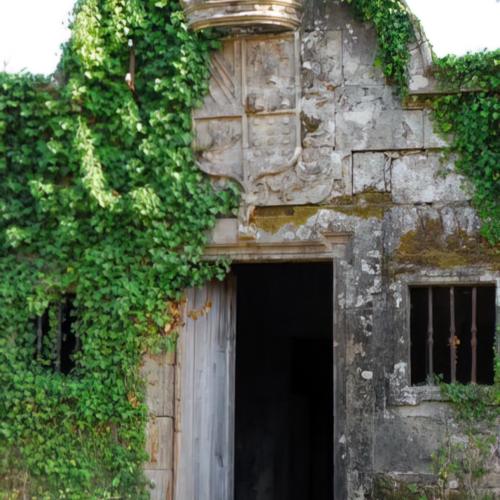
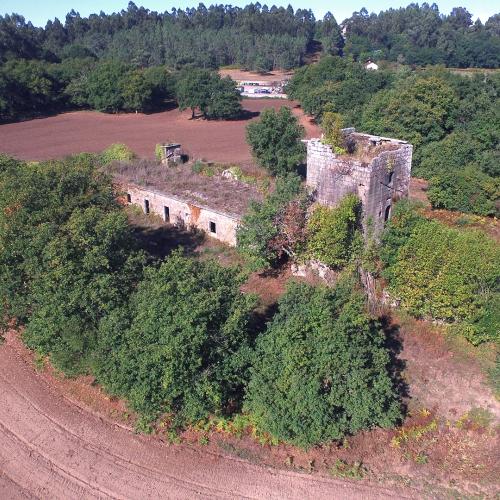
Attached to the tower stands the Pazo de Guimarei, built in the 17th century and considered, together with the tower, the most representative tower-pazo complex of A Estrada. Its first owner was Antonio de Mosquera Nóvoa, Lord of Villar de Payo Muñíz, a descendant of noble families such as the Villar, Sarmiento, Mosquera and Aranda lineages. The manor house preserves its ground floor with vaulted stone ceilings as well as several original interior spaces, including the kitchen, rooms and other chambers. On the main doorway a finely carved heraldic coat of arms can be seen, associated with the Marquises of Aranda in the 18th century, linking the complex to the nobility and the royal administration of the period.
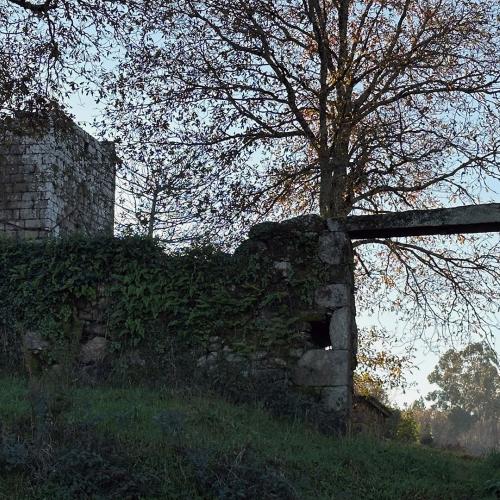
The complex is surrounded by oak and chestnut trees, which give it a setting of remarkable natural beauty and landscape value. Over time, both the tower and the manor house have suffered various damages, including a fire, which have shaped their current state.
Together, the Tower and Pazo of Guimarei represent a living testimony to the evolution of Galician defensive and aristocratic architecture. Today they stand as a place of special interest for visitors to A Estrada, combining medieval history, Baroque nobility and the rural landscape of Galicia.