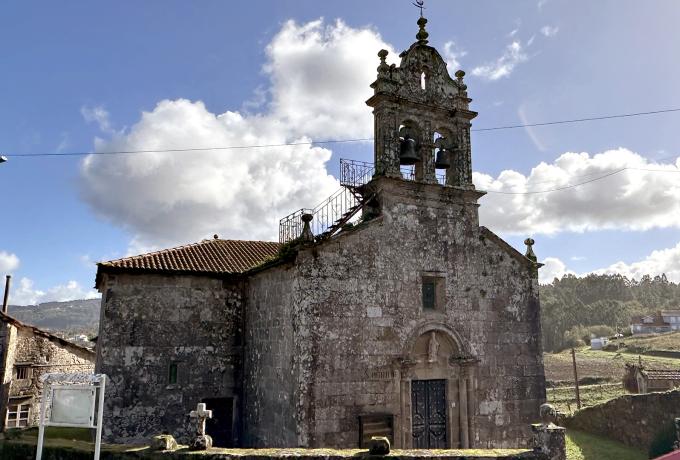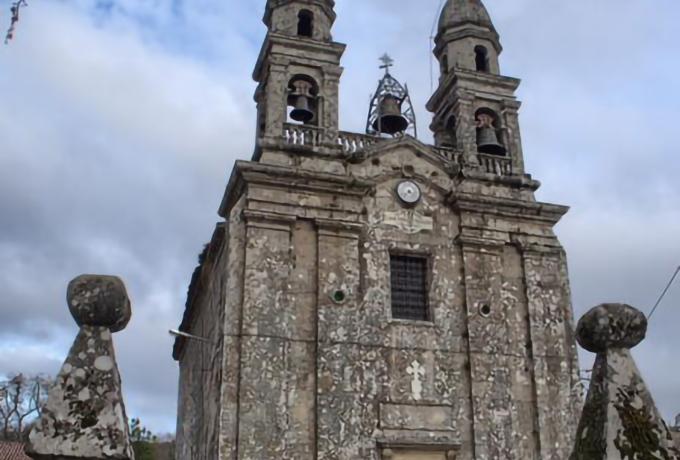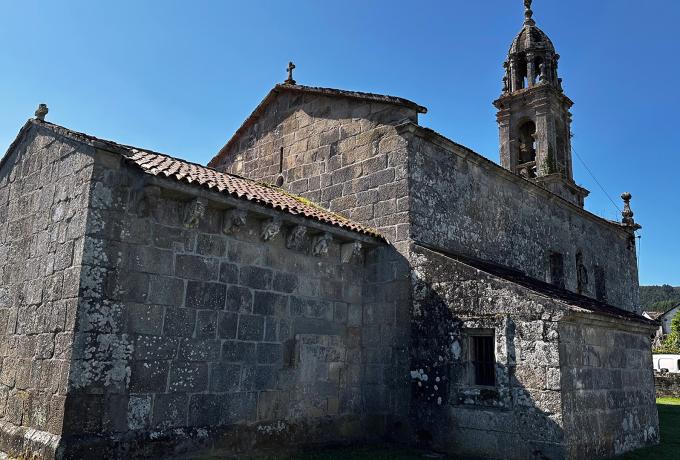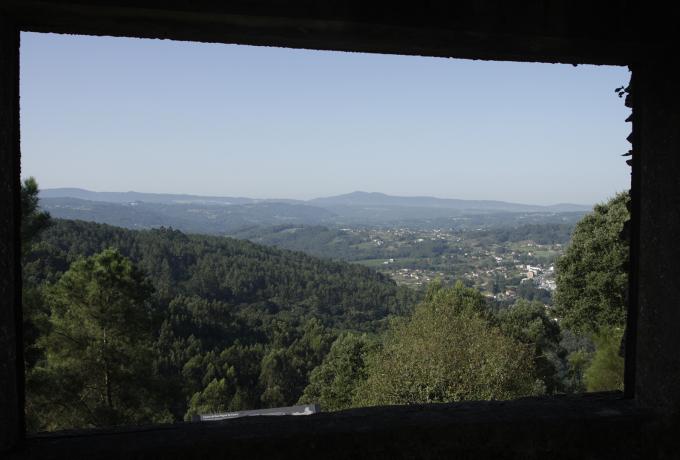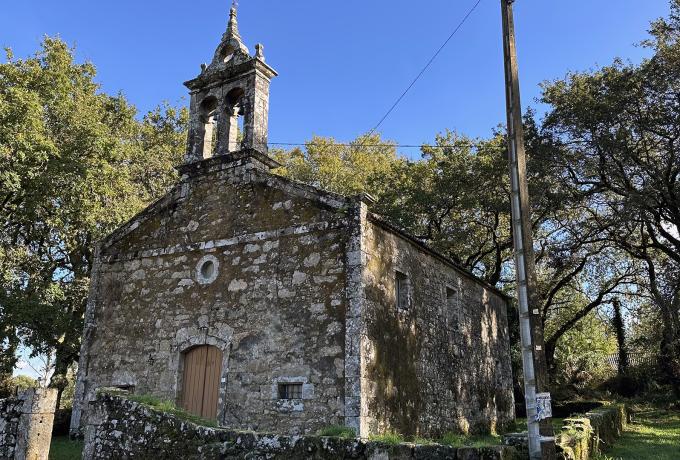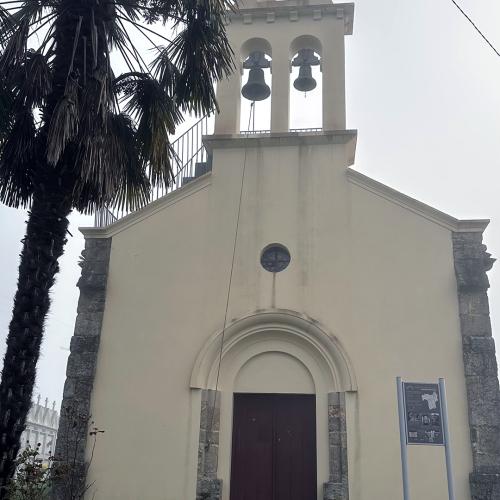

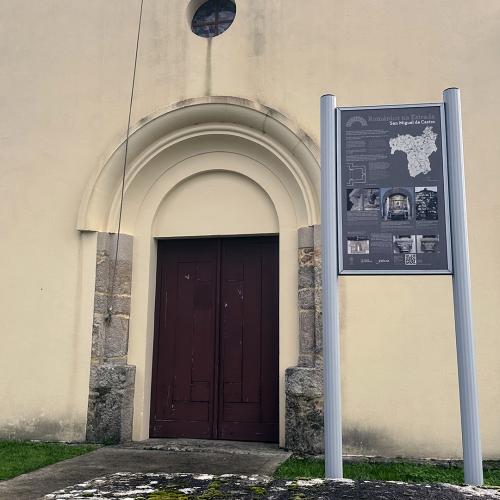

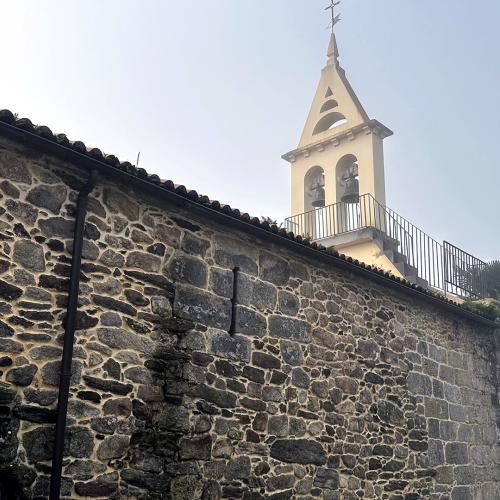
The hermitage of San Miguel, also known as the church of San Miguel de Castro, stands on mountainous terrain between the elevations of Castro and Pico Sacro. Its location makes it a natural balcony overlooking the Ulla valley. The building is preceded by a small atrium enclosed by a low wall, accessed by a short flight of steps that overcomes the slope from the main road. The first documented reference to the site dates back to the year 1115. Despite the reforms carried out over time, the building preserves elements of its original Romanesque structure. It has a single nave and a rectangular apse, the latter being, together with some wall fragments of the nave, the oldest part of the complex. The main façade corresponds to a later intervention that slightly enlarged the nave. The side walls show different construction phases, with a combination of well-cut ashlar and masonry, as well as later openings and doors. The apse, small in size, retains irregular stonework walls and preserves remains of the original eaves and two corbels shaped like a prow. Inside, the plastering makes it difficult to interpret the building, although recent restorations have revealed elements such as a flared window in the north wall. The apse opens to the nave through a semicircular triumphal arch supported by columns with smooth shafts and heavily eroded vegetal capitals, features that allow it to be dated to the late 12th century. Two Romanesque baptismal fonts also stand out, especially the interior one, of great beauty and with a fluted bowl. It is also known that the church once had 16th-century wall paintings, now lost, which enhances the historical interest of this modest hermitage set in a privileged location within the Ulla landscape.