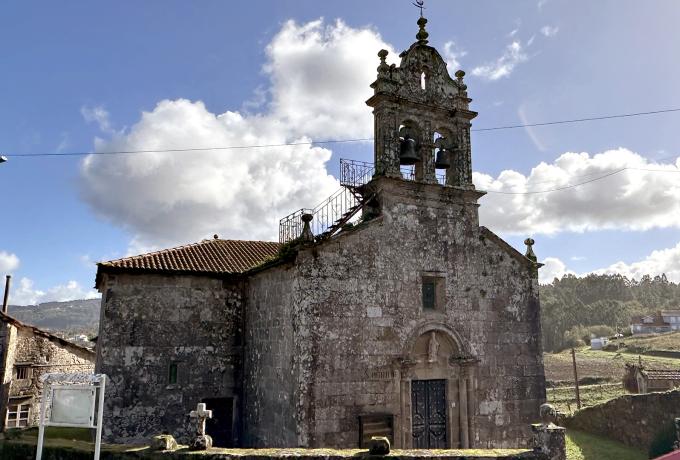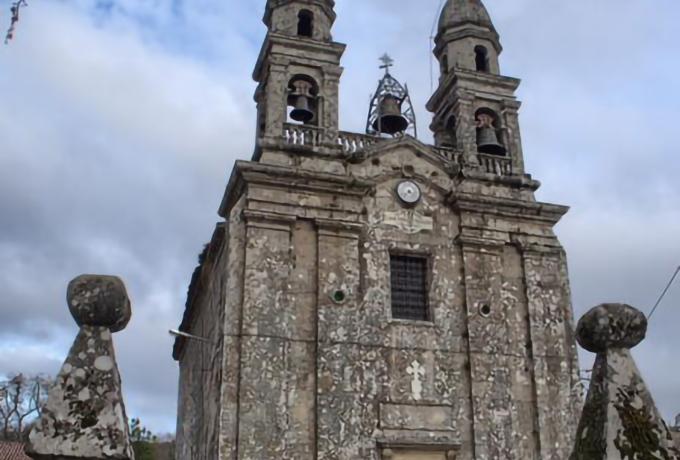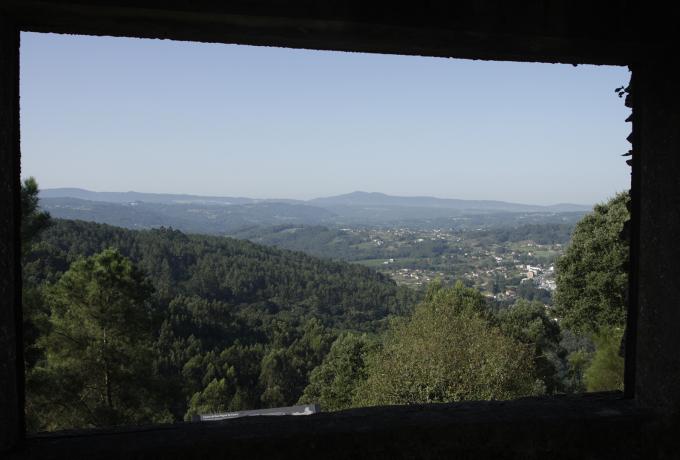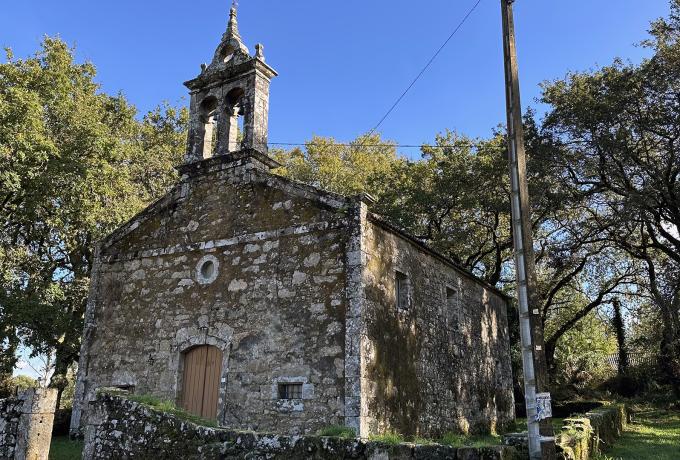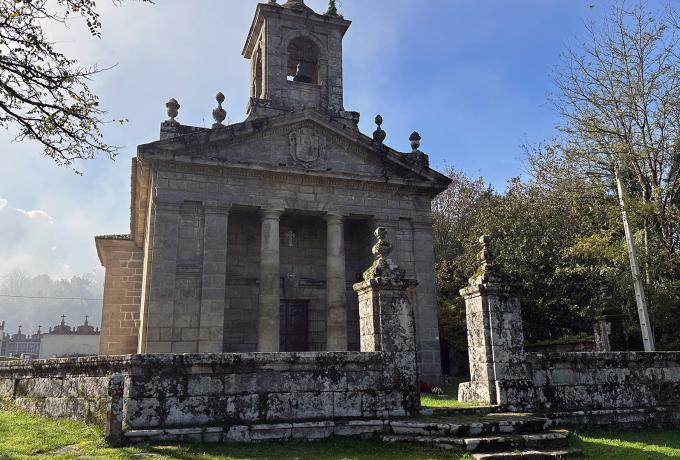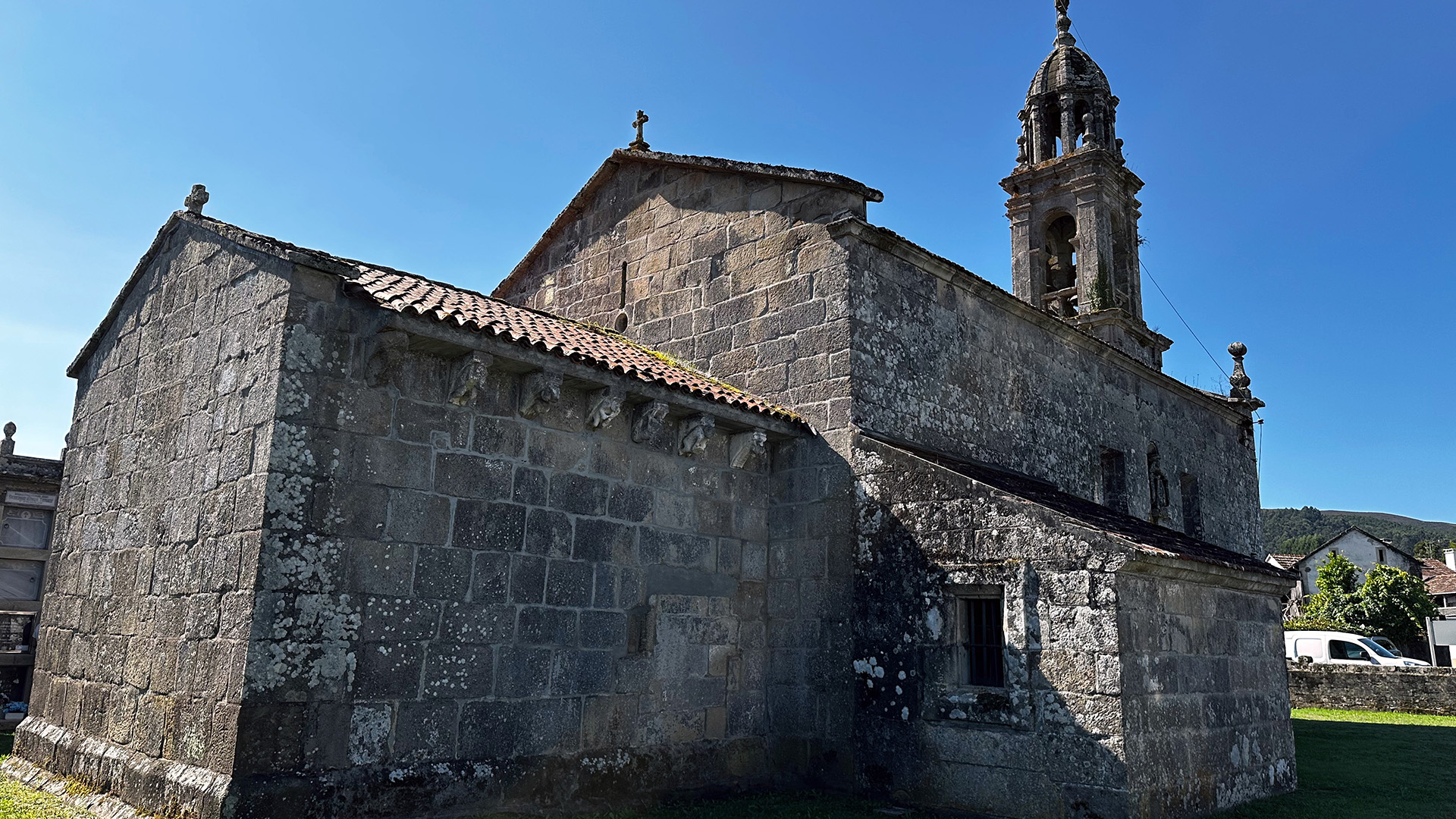
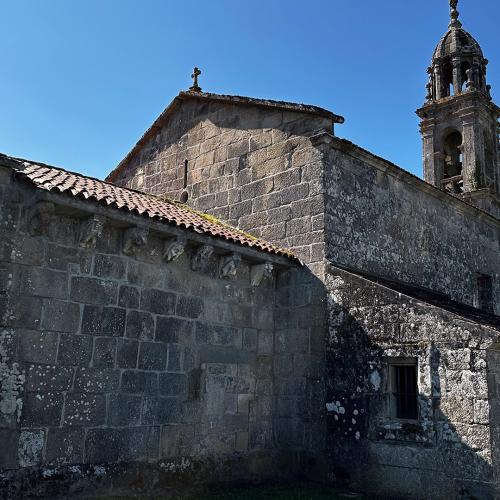
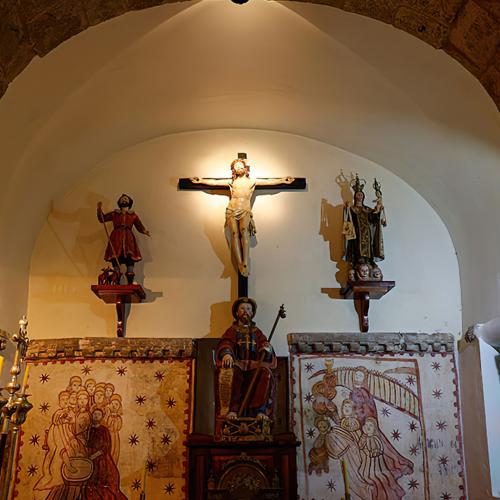
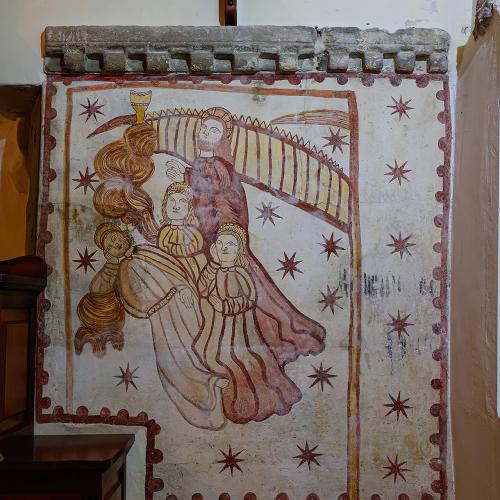
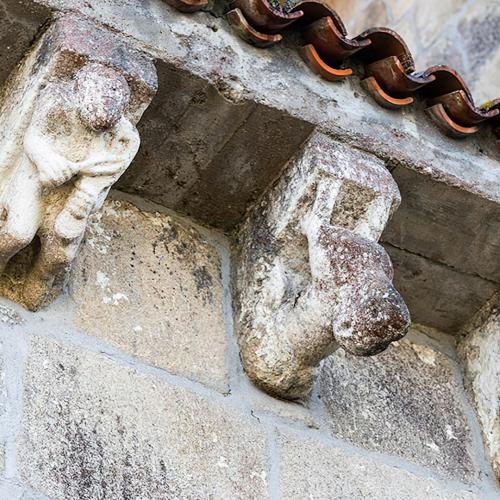
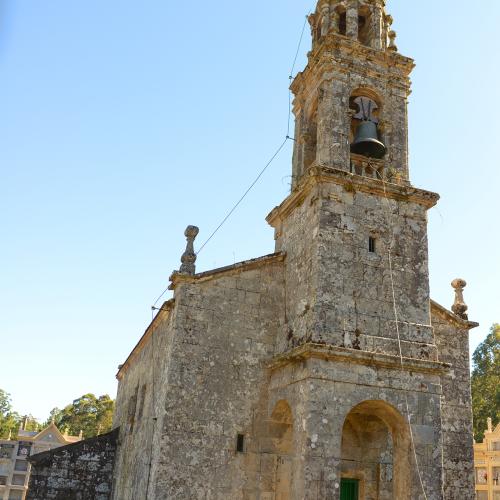
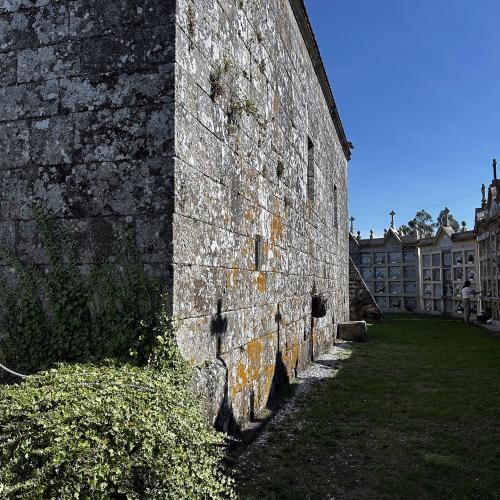
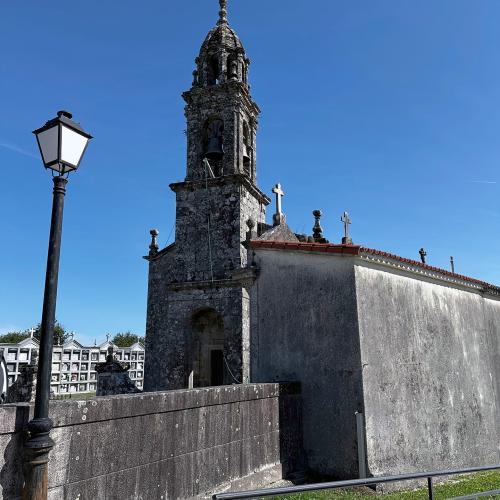
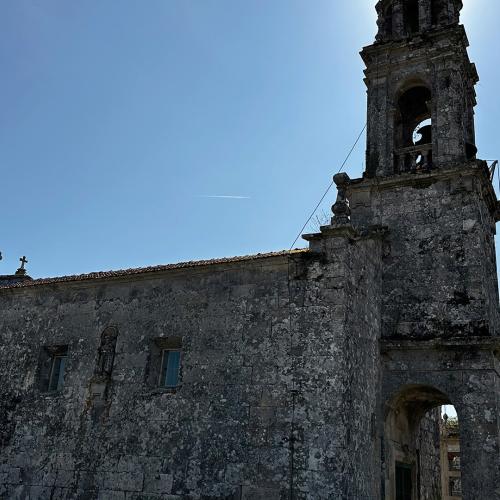
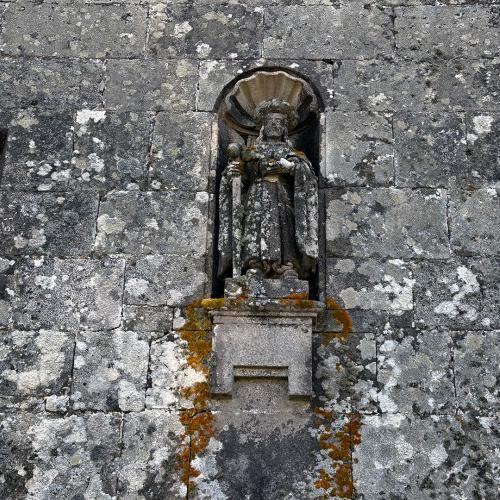
The church of Santiago de Tabeirós stands in a territory with deep historical roots, known since ancient times and referred to in the Middle Ages as Taberiolos, the name of the pre-Roman tribe that inhabited these lands and left its mark on this area from very early times. This early historical context reinforces the cultural value of the temple, located in a landscape where human presence and religious activity have continued uninterrupted for centuries. The church is an example of late 12th-century Romanesque architecture. The building has a single-nave plan and a rectangular apse, divided into two sections, which has survived almost intact and allows a clear understanding of its chronology. Beneath the roofline stand out the corbels, richly decorated with highly original sculptures that constitute one of the most expressive elements of the building and reflect the rich iconography typical of rural Romanesque art. Over time, the temple underwent several modifications, the most evident being the present façade, the result of later interventions that replaced the original Romanesque one. Nevertheless, the chancel and part of the lateral walls preserve their original masonry. Restoration works carried out at the end of the 20th century made it possible to recover and highlight elements of great heritage interest. In 1988, during the restoration of the altarpiece, paintings dating from the 16th century were discovered, and in 1998 the existence of an original Romanesque altar was documented. These findings confirm the continuity of the temple’s liturgical use and turn the Church of Santiago de Tabeirós into a valuable testimony to the historical, artistic and religious evolution of the region, allowing visitors today to understand directly the long spiritual and cultural trajectory of this place.
Location