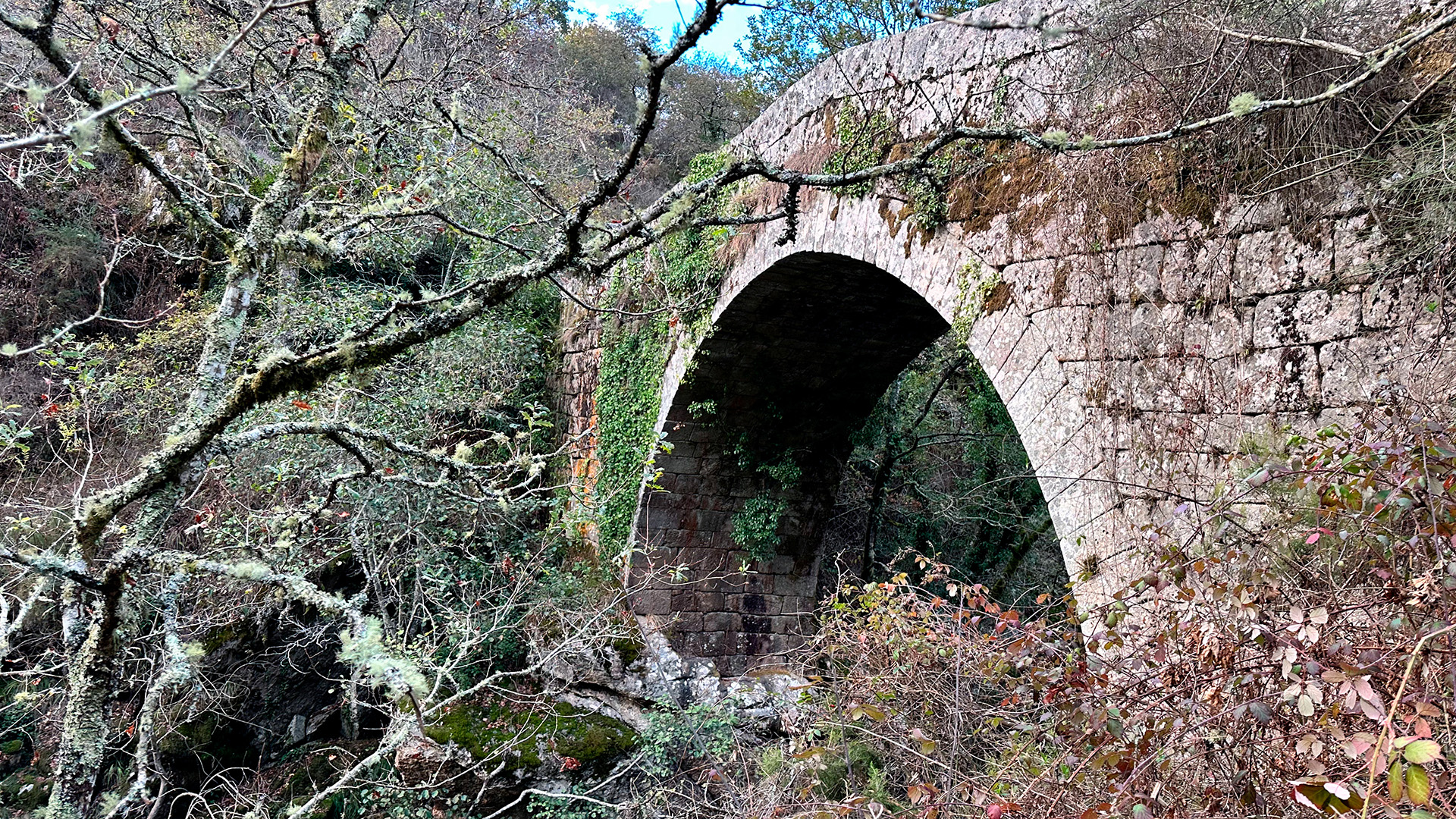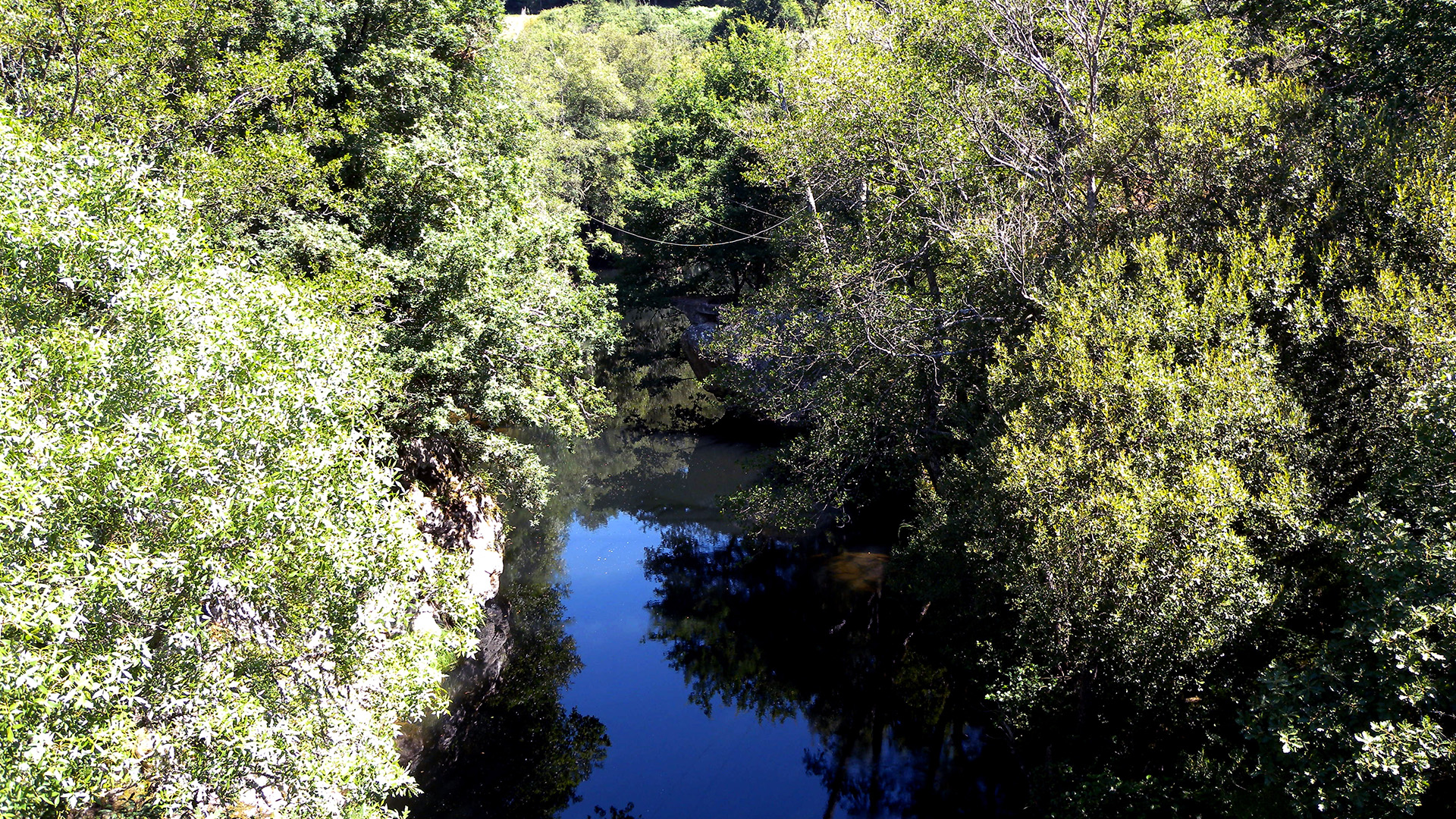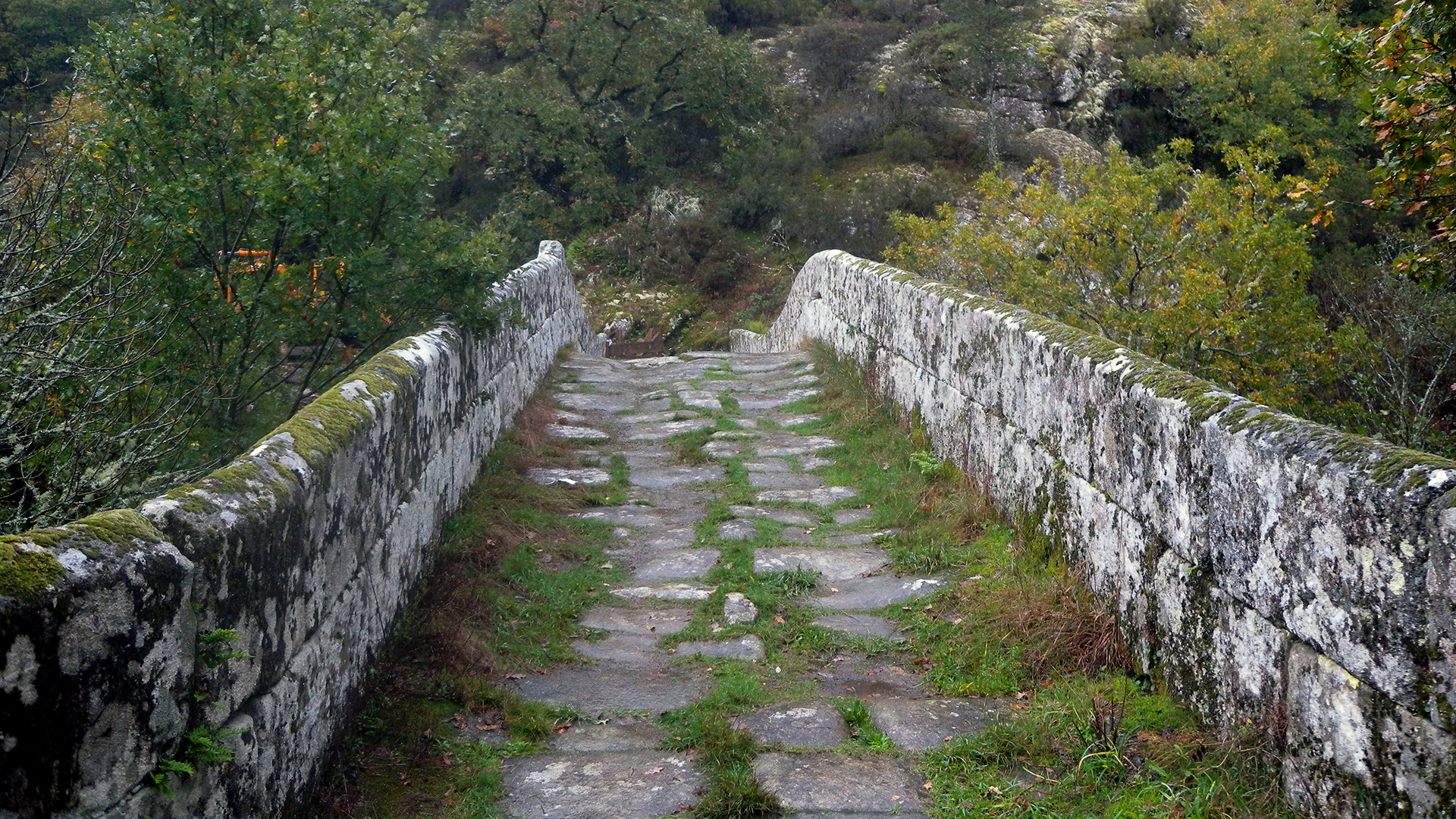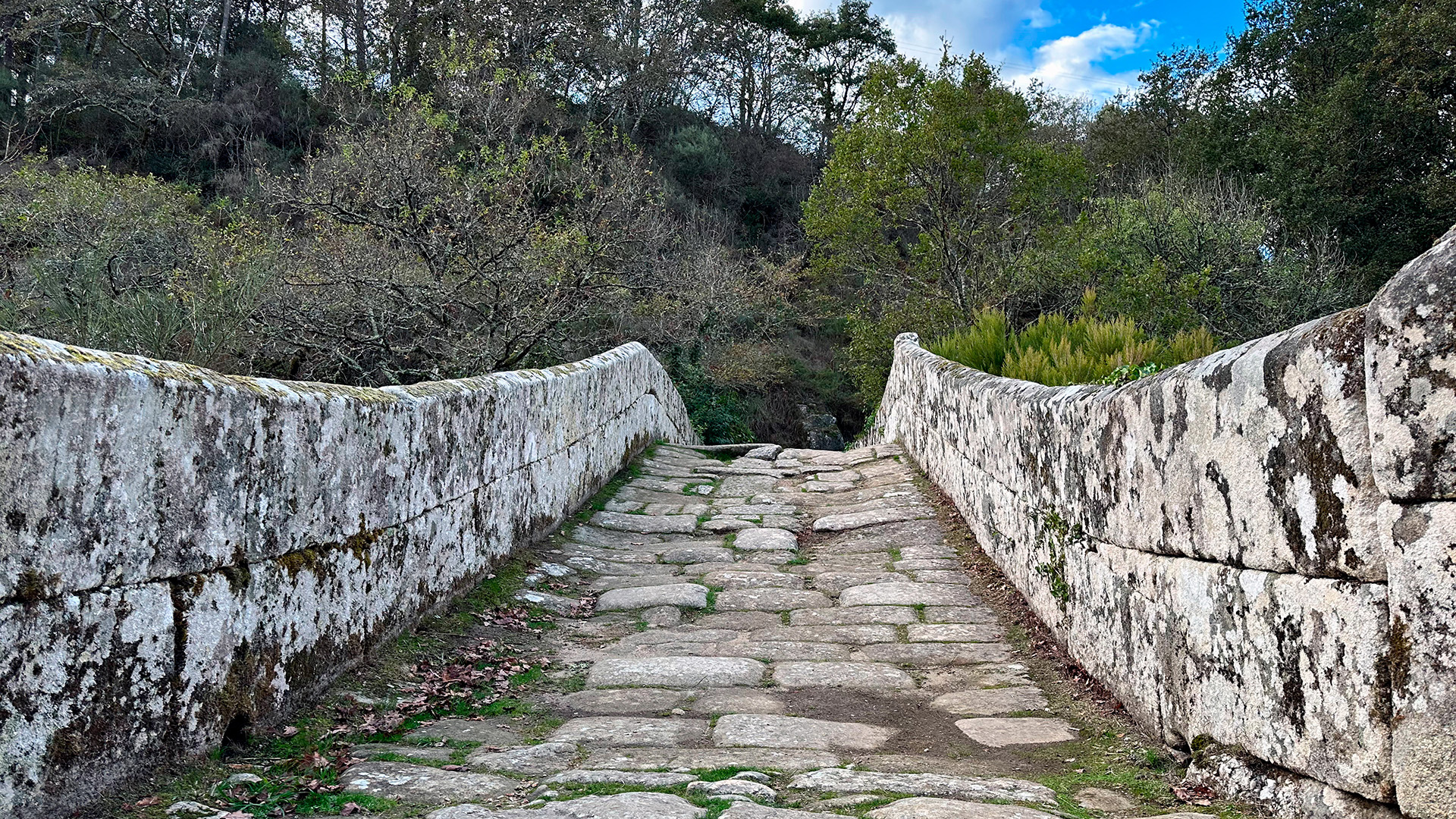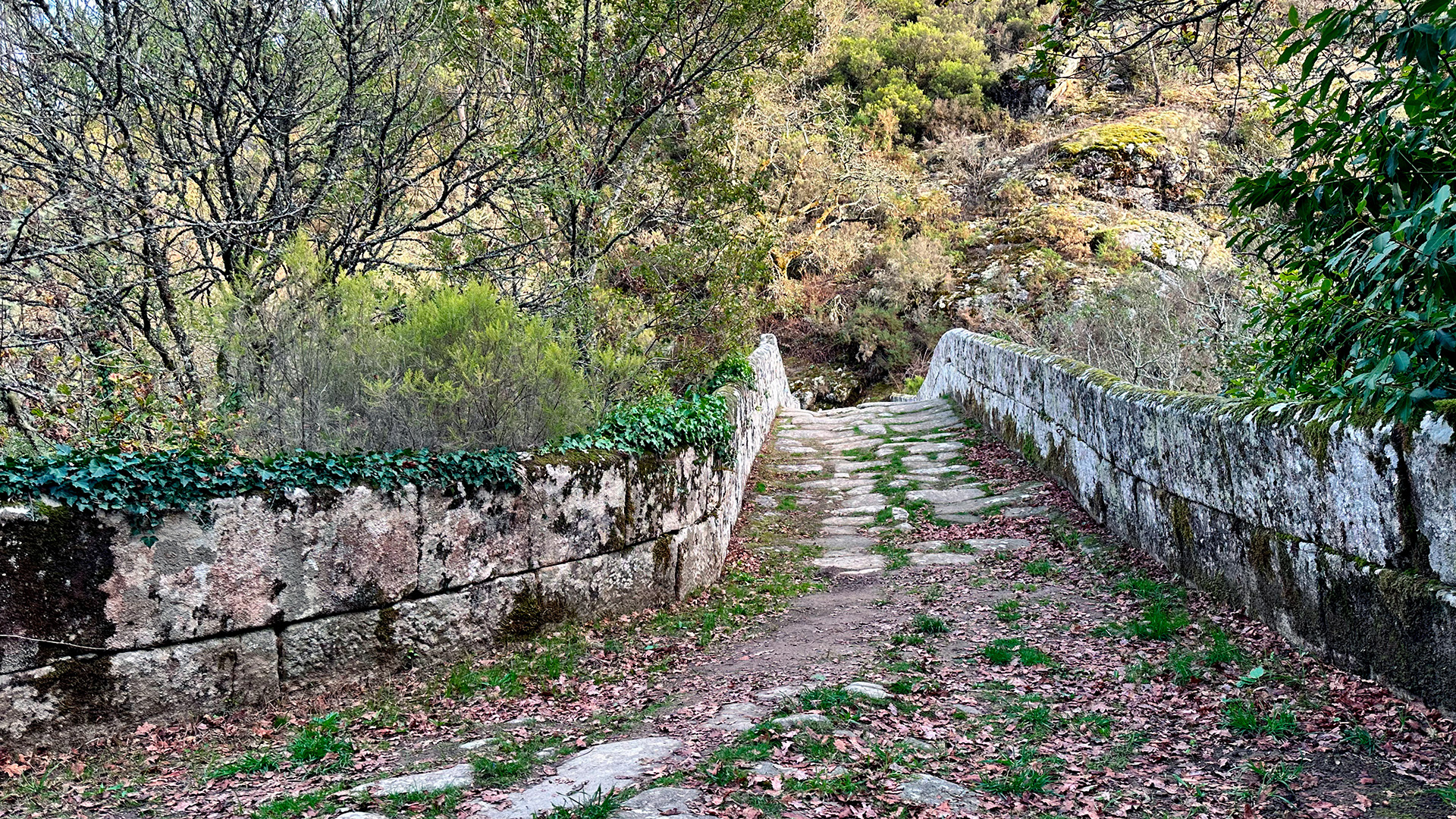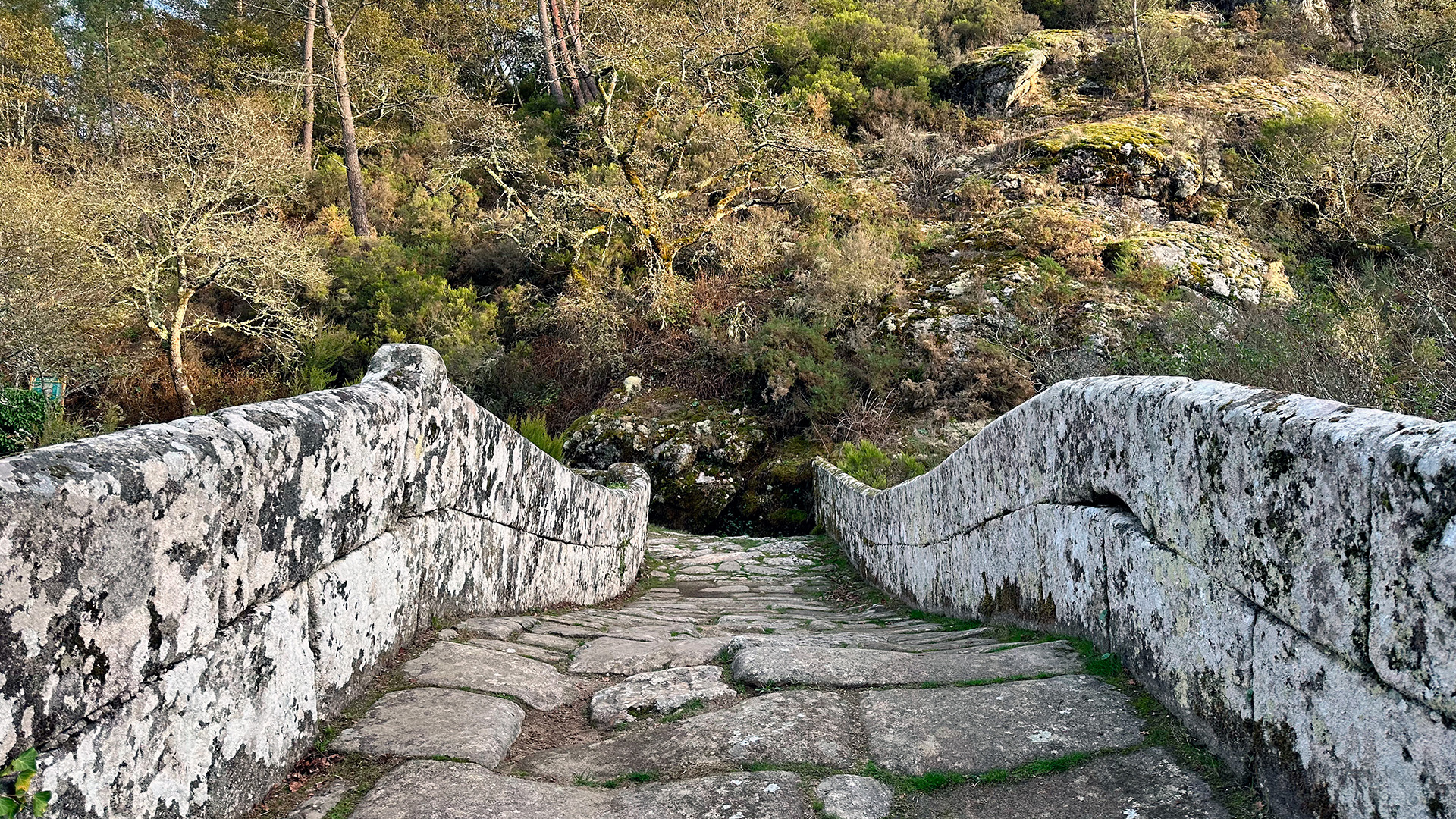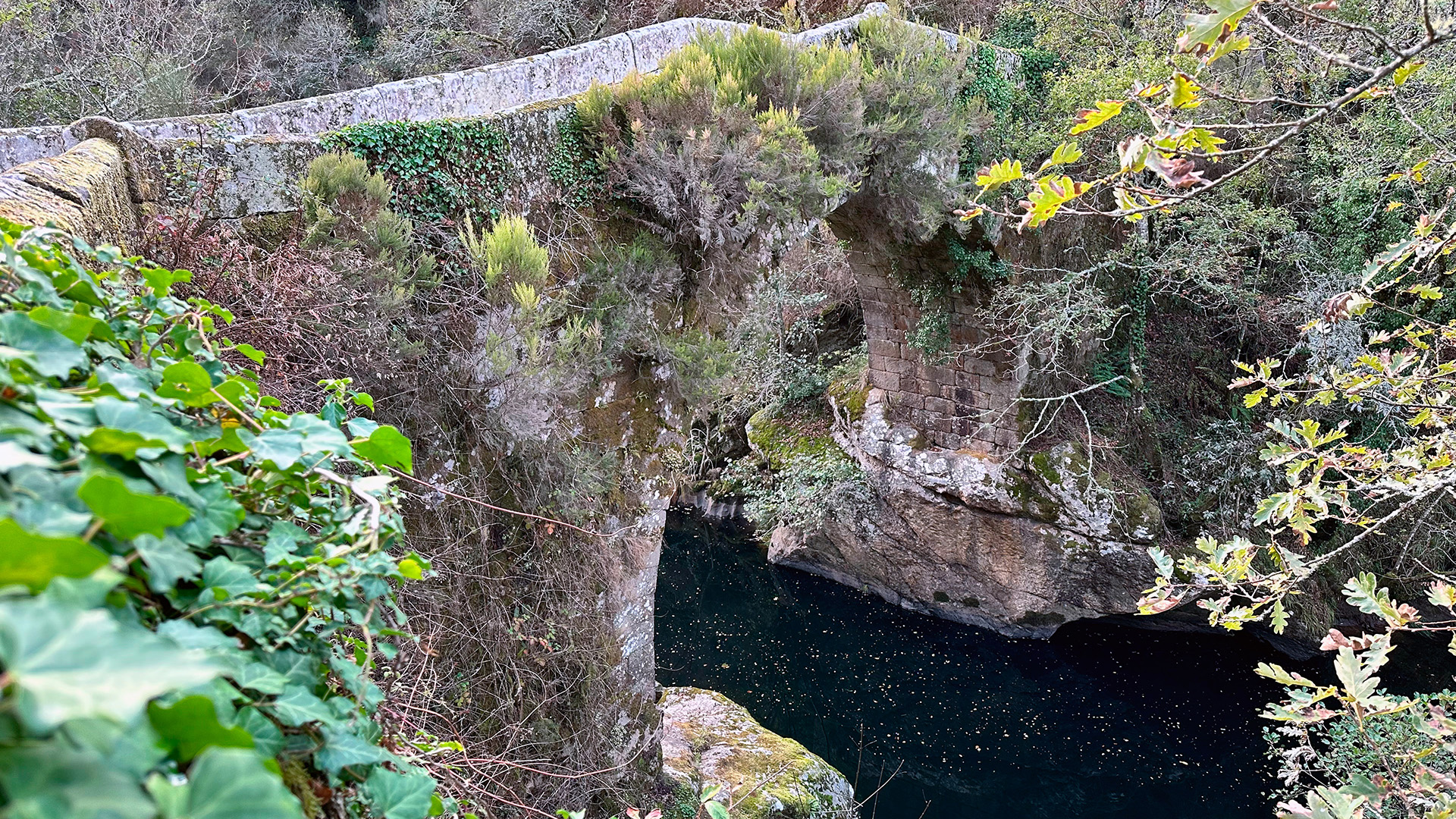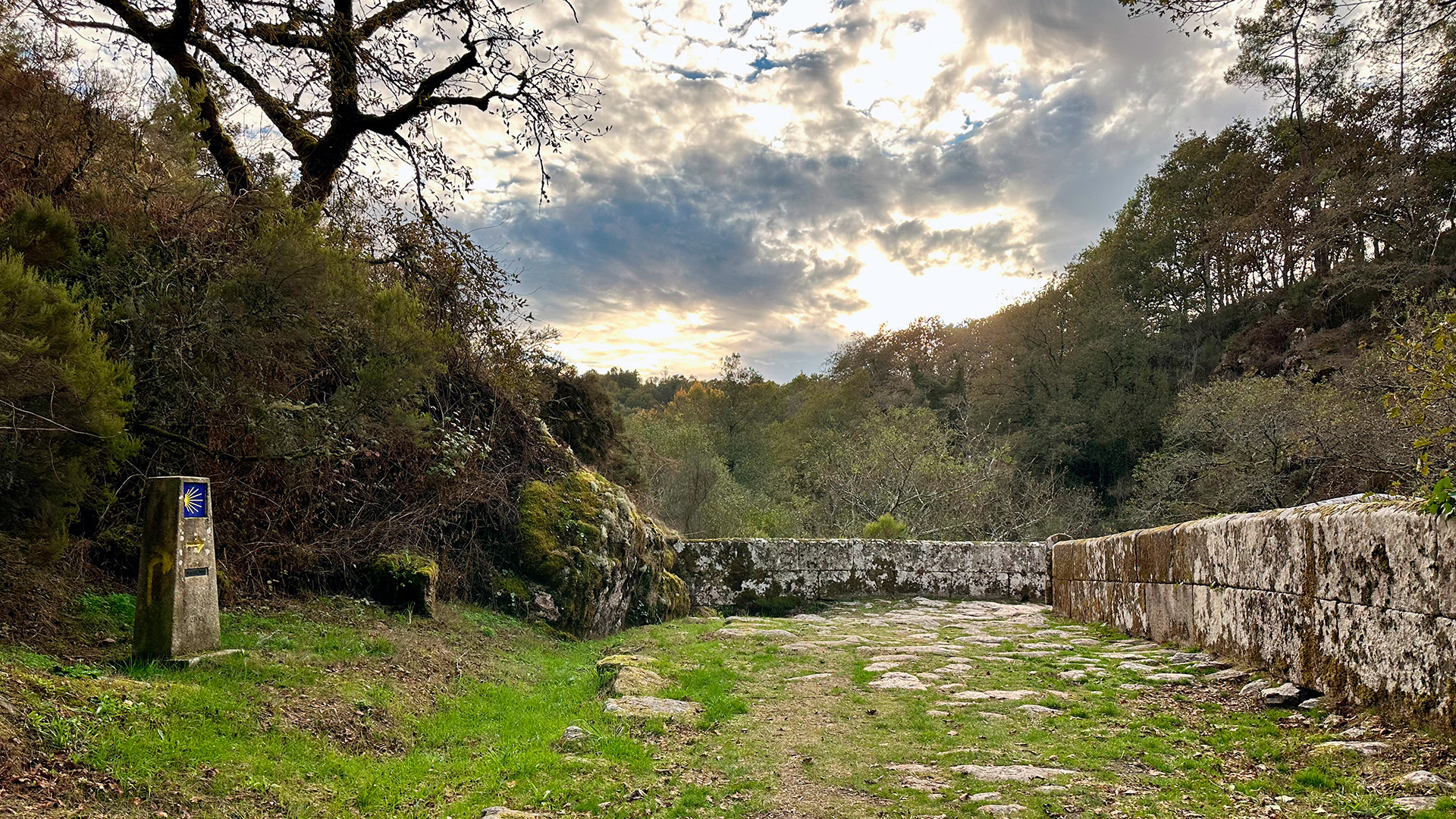
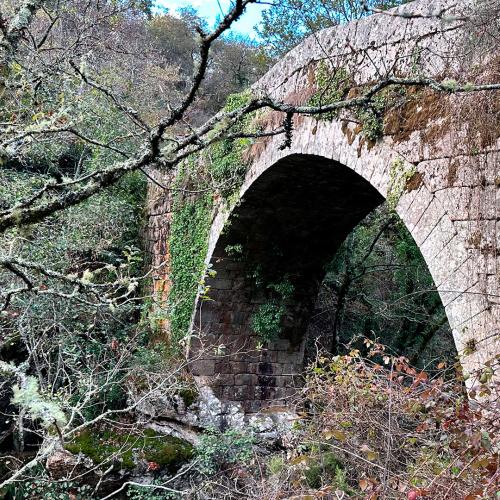
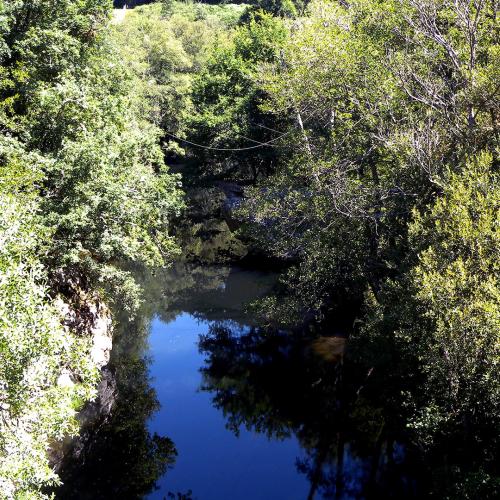
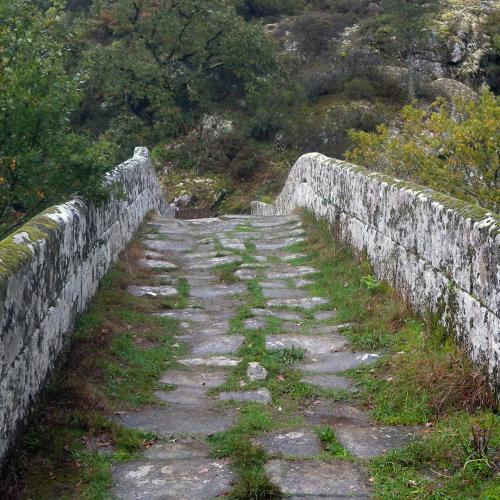
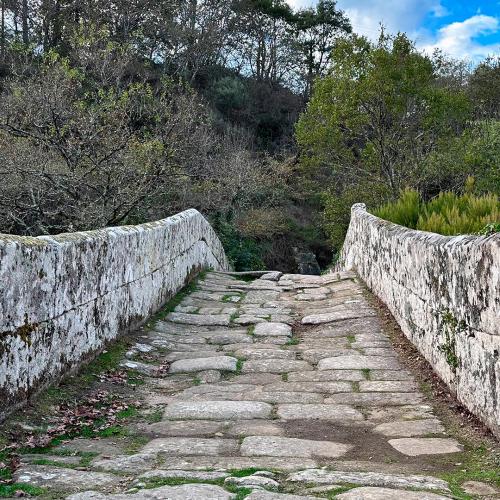
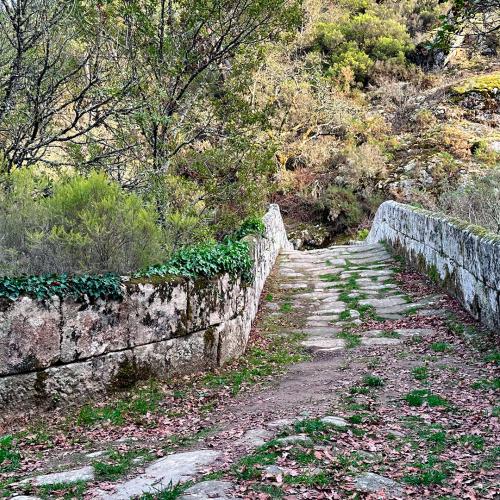
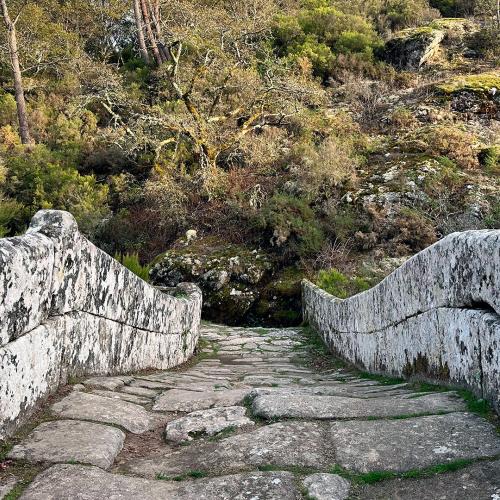
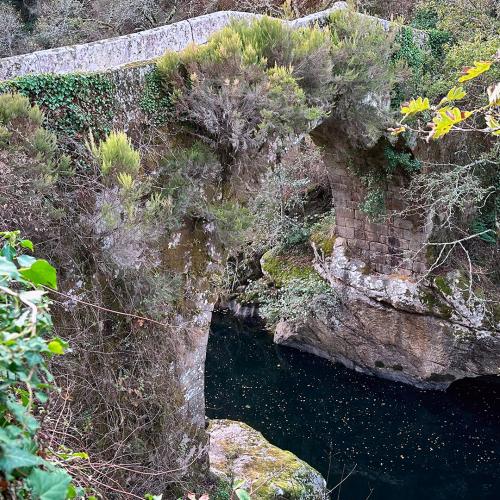
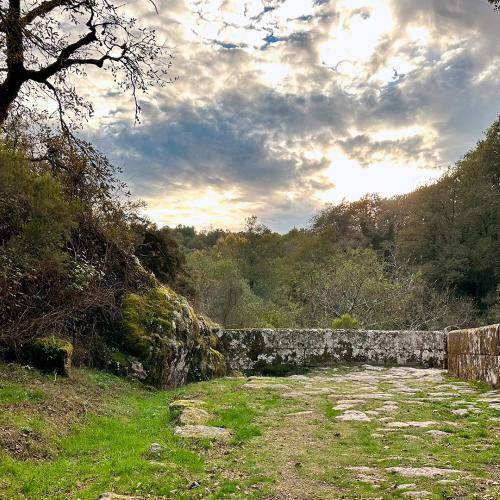
Ponte Taboada Bridge rises over the Deza River and was built in the year 912, a date recorded in an inscription carved on a nearby rock. It is a single-arch stone bridge connecting the municipalities of Silleda and Lalín, and represents one of the oldest and most significant examples of medieval architecture in the area. Its location takes advantage of a natural narrowing of the riverbed, resting directly on two large granite outcrops.
Ponte Taboada formed part of the ancient royal road linking Santiago de Compostela and Ourense. It most likely replaced earlier structures, probably made of wood, from which it inherited its original name, Pons Tabulata. The bridge is built in plain granite ashlar masonry and features a single semicircular arch of considerable height, a functional and durable construction solution that allowed it to remain in use for centuries.
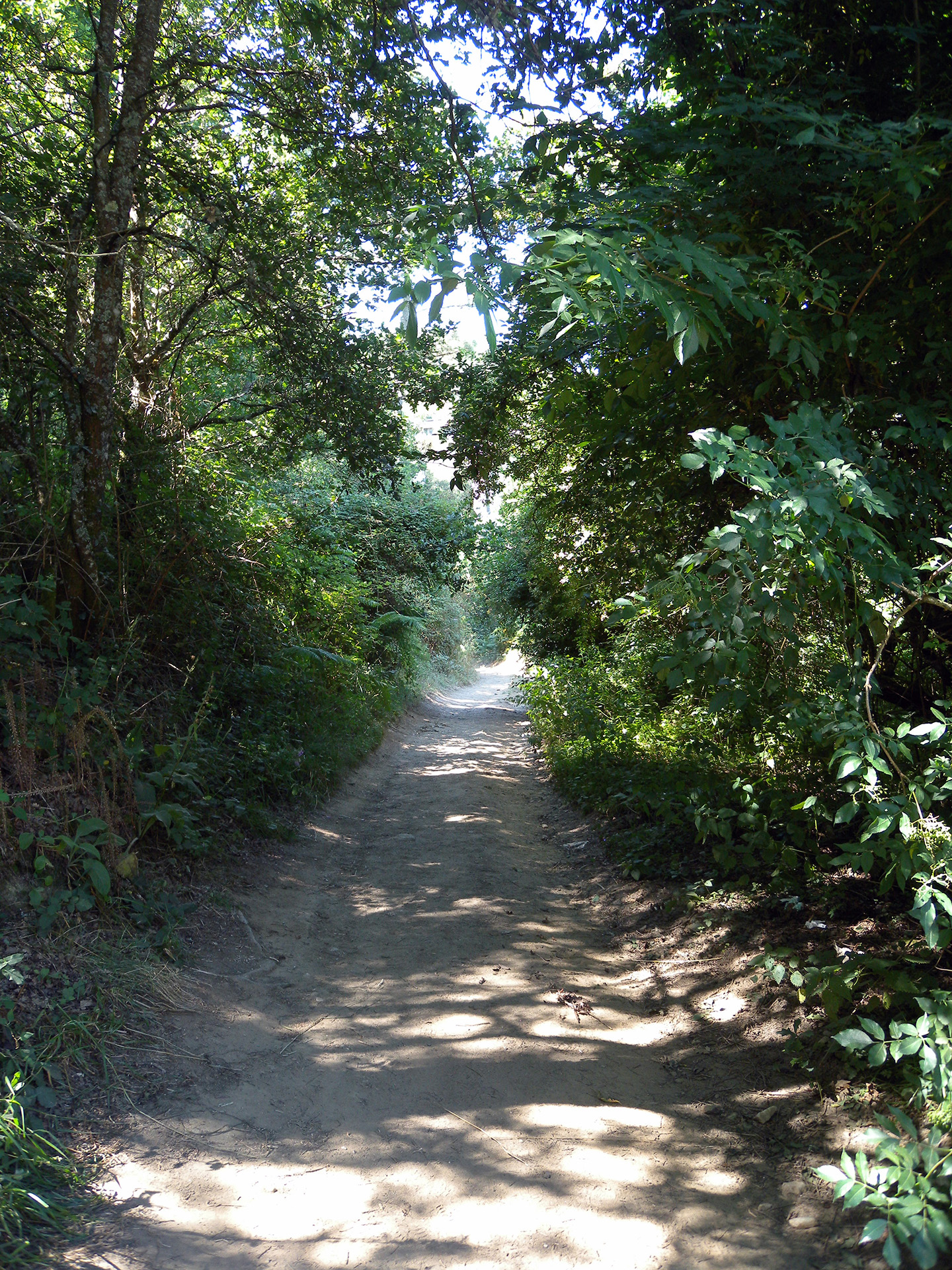
Very close to the bridge, in the direction of the Way of St. James, a Latin inscription can still be seen that records its construction: “LaVORABERVNT isTA PONTE In ERA DCCCCL eT FVIT PERFECTA pRIDIE KL DS APIES”, confirming its completion on 31 March 912. Although the bridge ceased to be passable after the construction of a road in the second half of the 19th century, it later became part of the route followed by pilgrims along the Vía de la Plata towards Santiago. Its presence, integrated into the river landscape of the Deza valley and associated with the passage of pilgrims, makes Ponte Taboada an exceptional testimony to the history of medieval communications in Galicia.