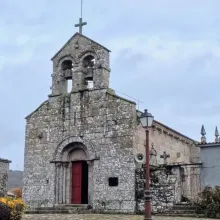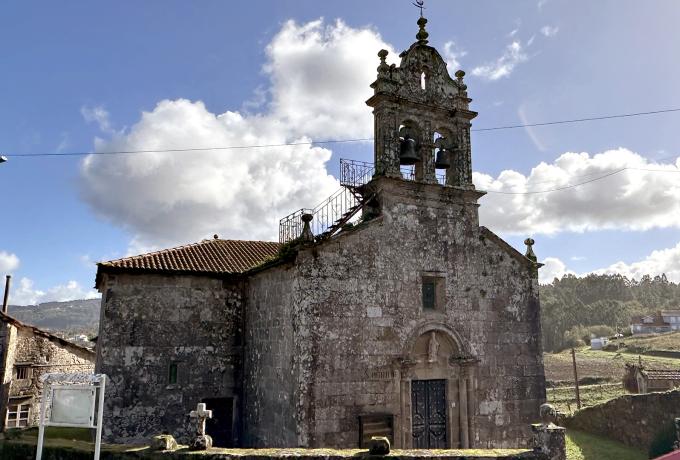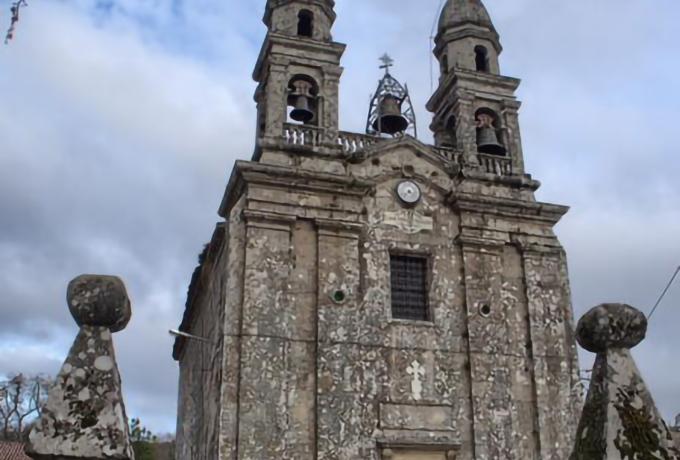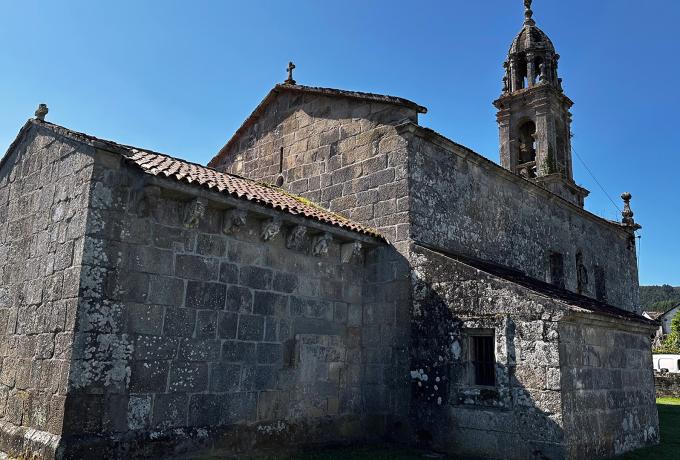
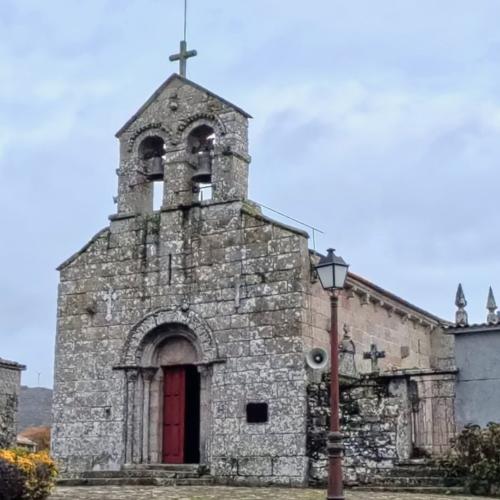
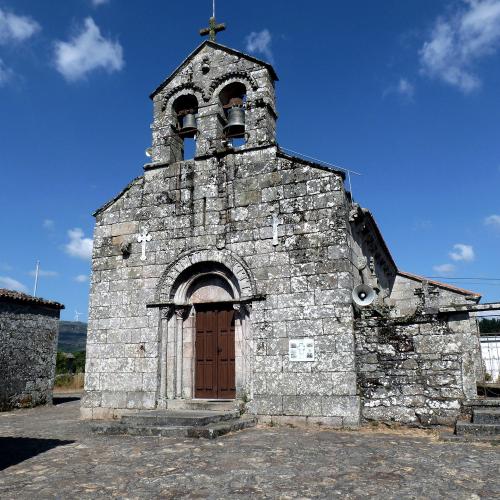
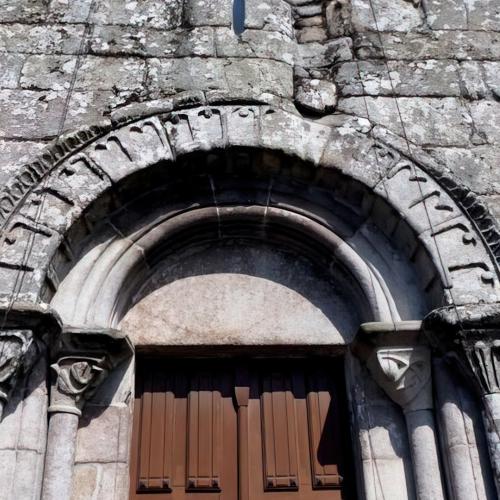
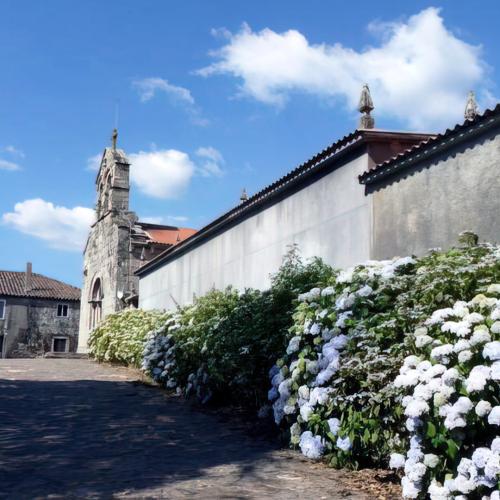
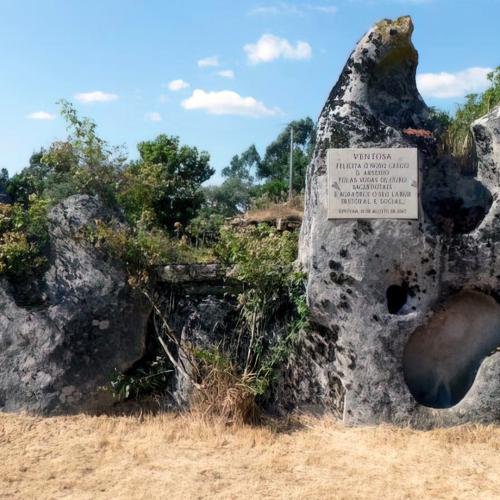
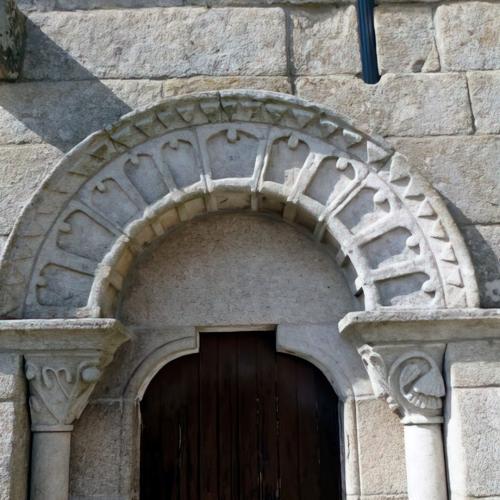
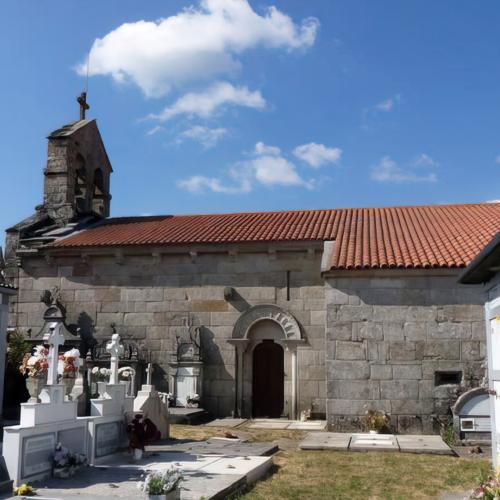
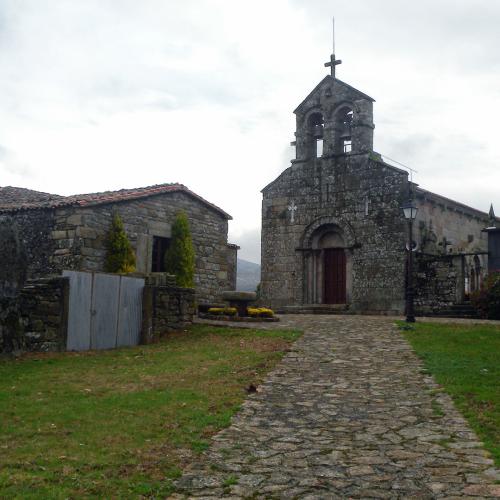
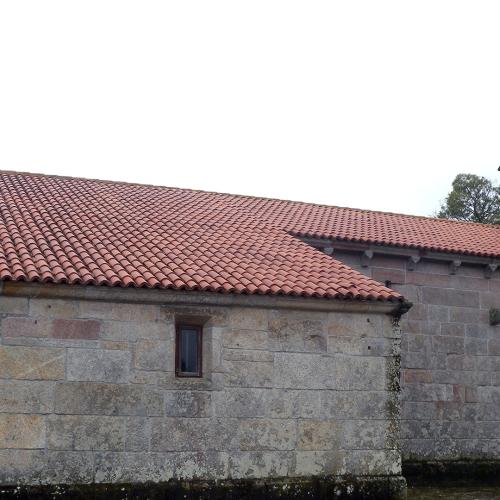
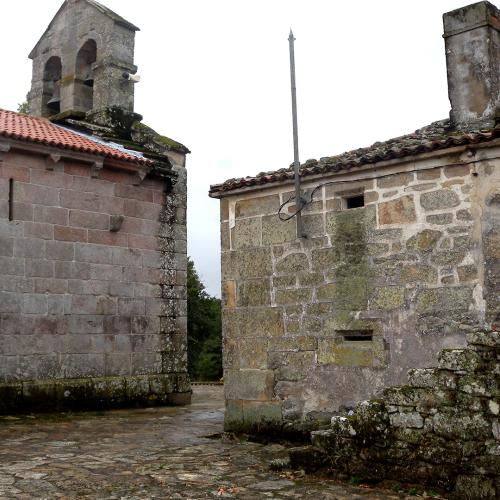
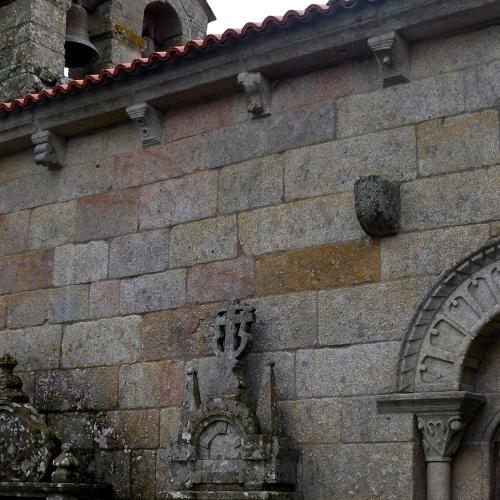
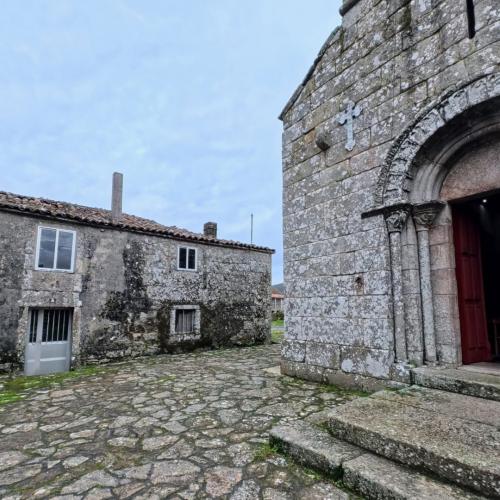
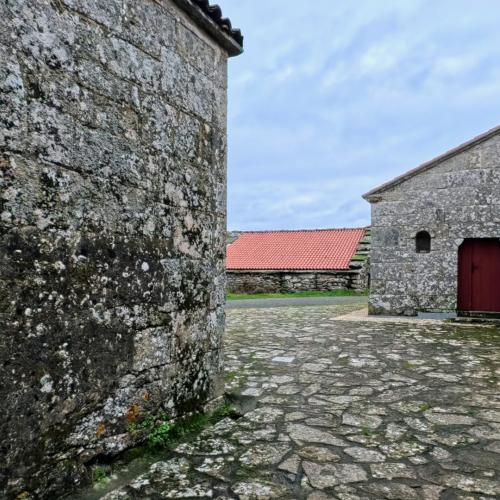
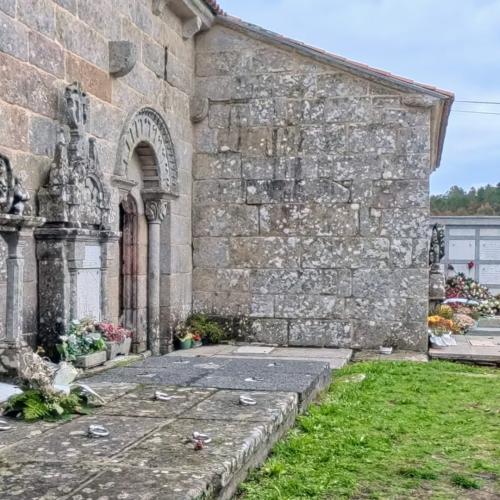
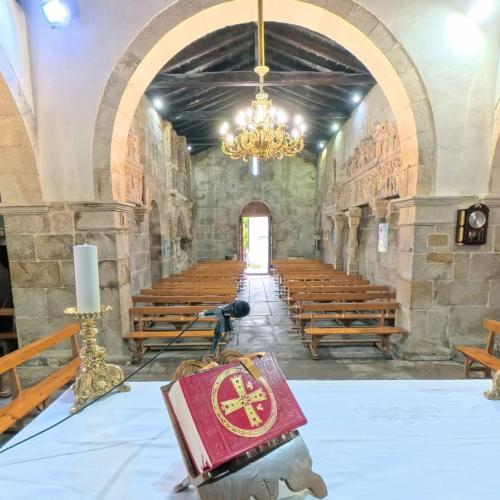
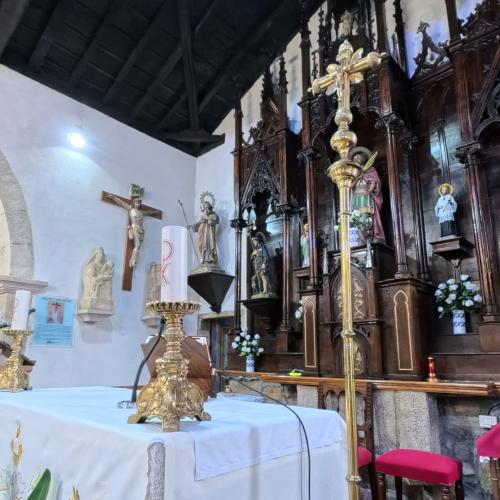
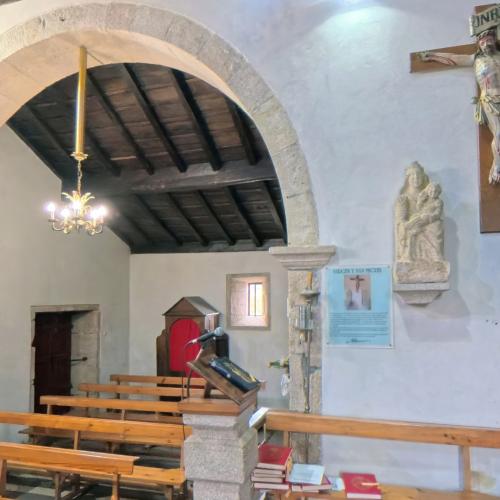
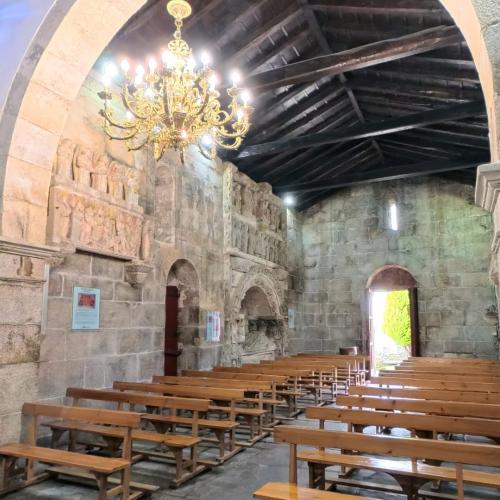
The Church of San Xulián de Ventosa is one of the most outstanding Romanesque temples in the region. It was built between the 12th and 13th centuries, approximately between the years 1170 and 1200. The building has remained almost intact, allowing visitors to clearly appreciate its original architecture and the medieval atmosphere that characterises it. Dedicated to Saint Julian, the church is notable both for its antiquity and for the artistic quality of the elements preserved within it.
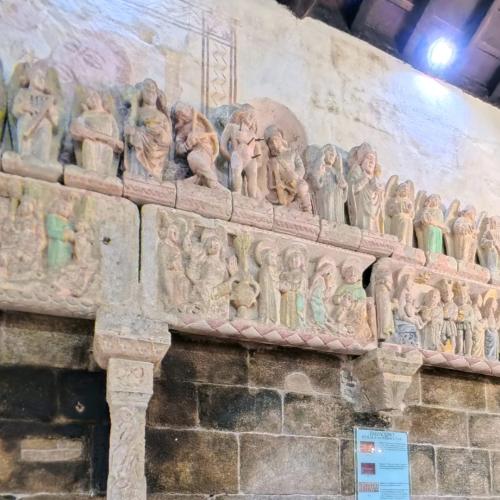
One of the most remarkable features of the temple is the tomb of Abbot Lope de Ventosa, an exceptional work due to its iconography and of great historical and artistic value. Nearby, several complete elements of an ancient baldachin are preserved in the nave, forming an elegant ensemble that is unique in the region and considered one of the most beautiful of its kind in Galicia.
The artistic quality of these pieces has led some specialists to attribute both the tomb and the baldachin to a disciple of Master Mateo, the famous author of the Portico of Glory in the Cathedral of Santiago de Compostela, although other researchers believe that the tomb may date from a slightly later period. Whatever its definitive authorship, the Church of San Xulián de Ventosa represents a key site for understanding late Galician Romanesque art and constitutes an essential visit for those wishing to discover the artistic and spiritual heritage of inland Galicia.