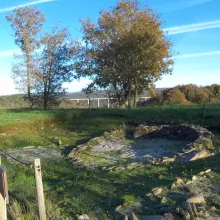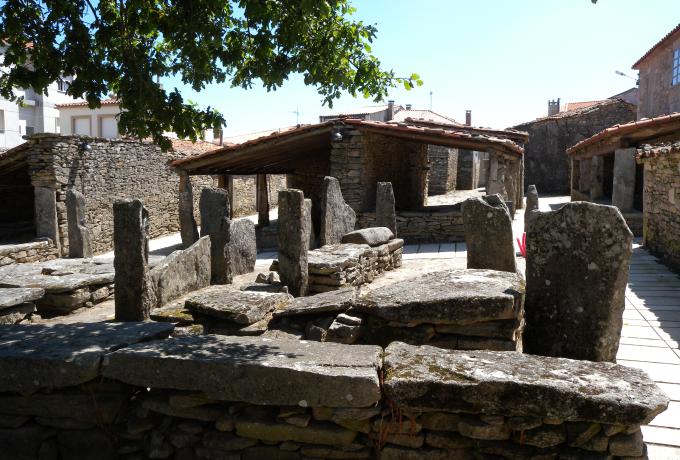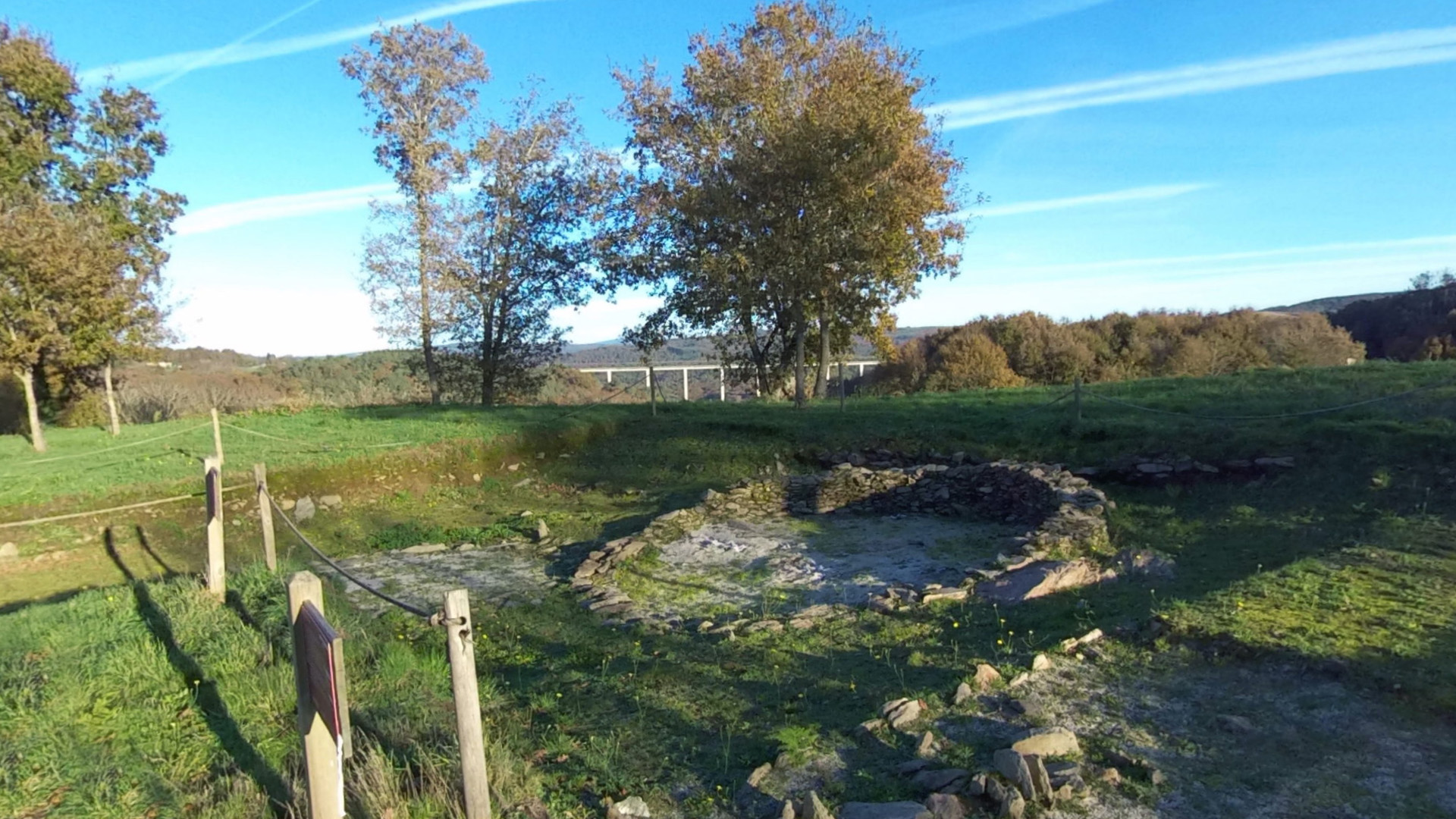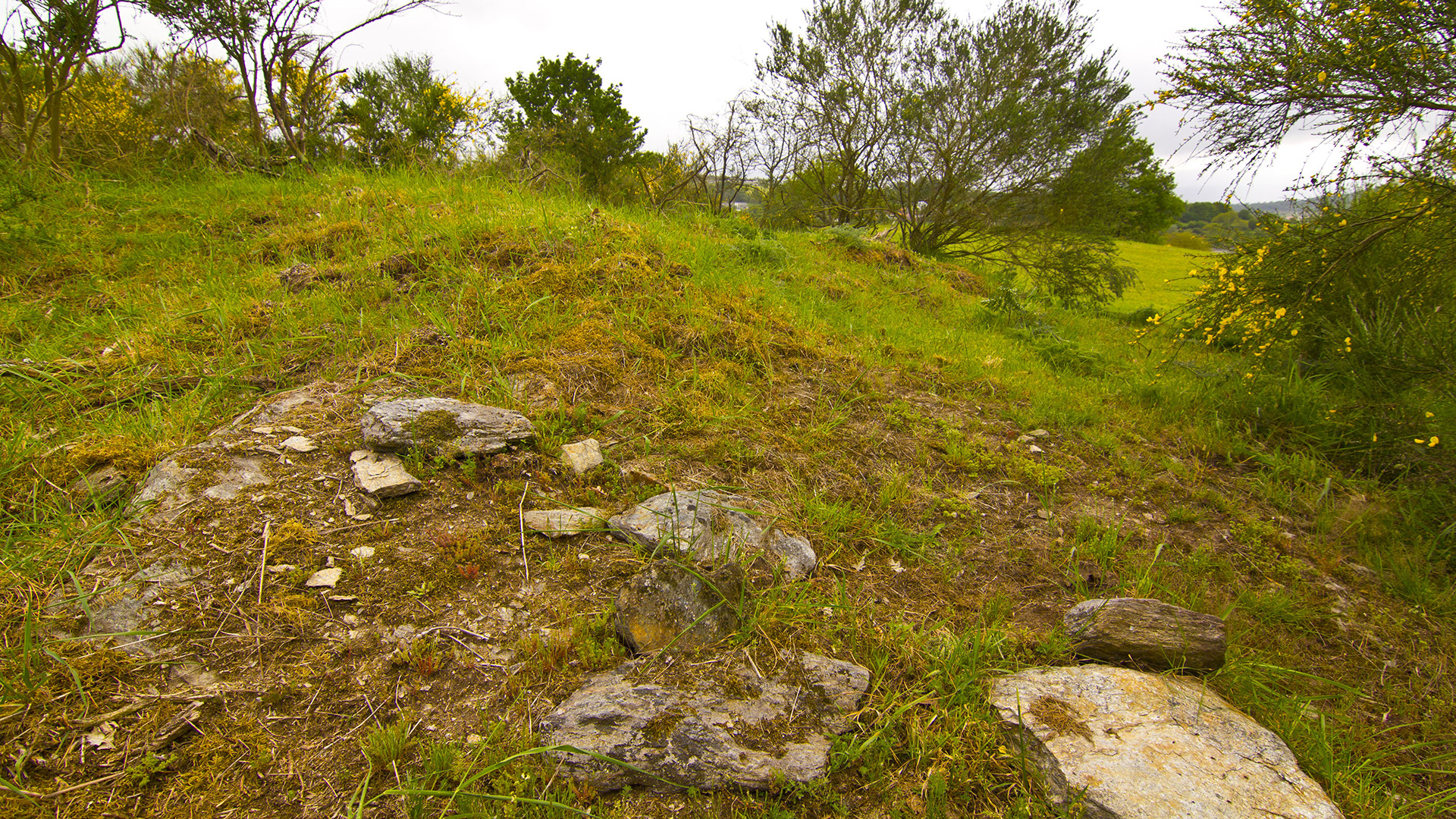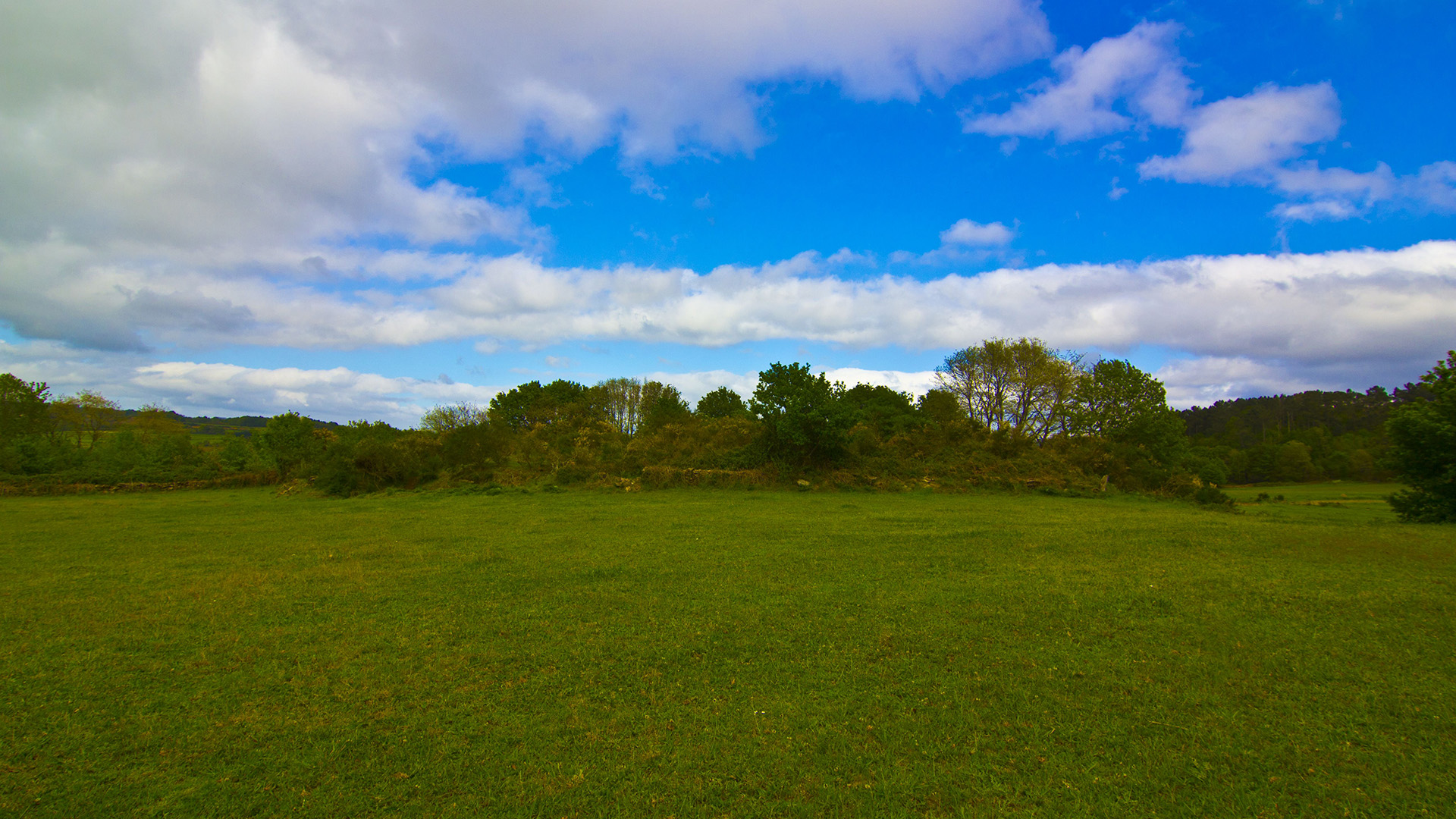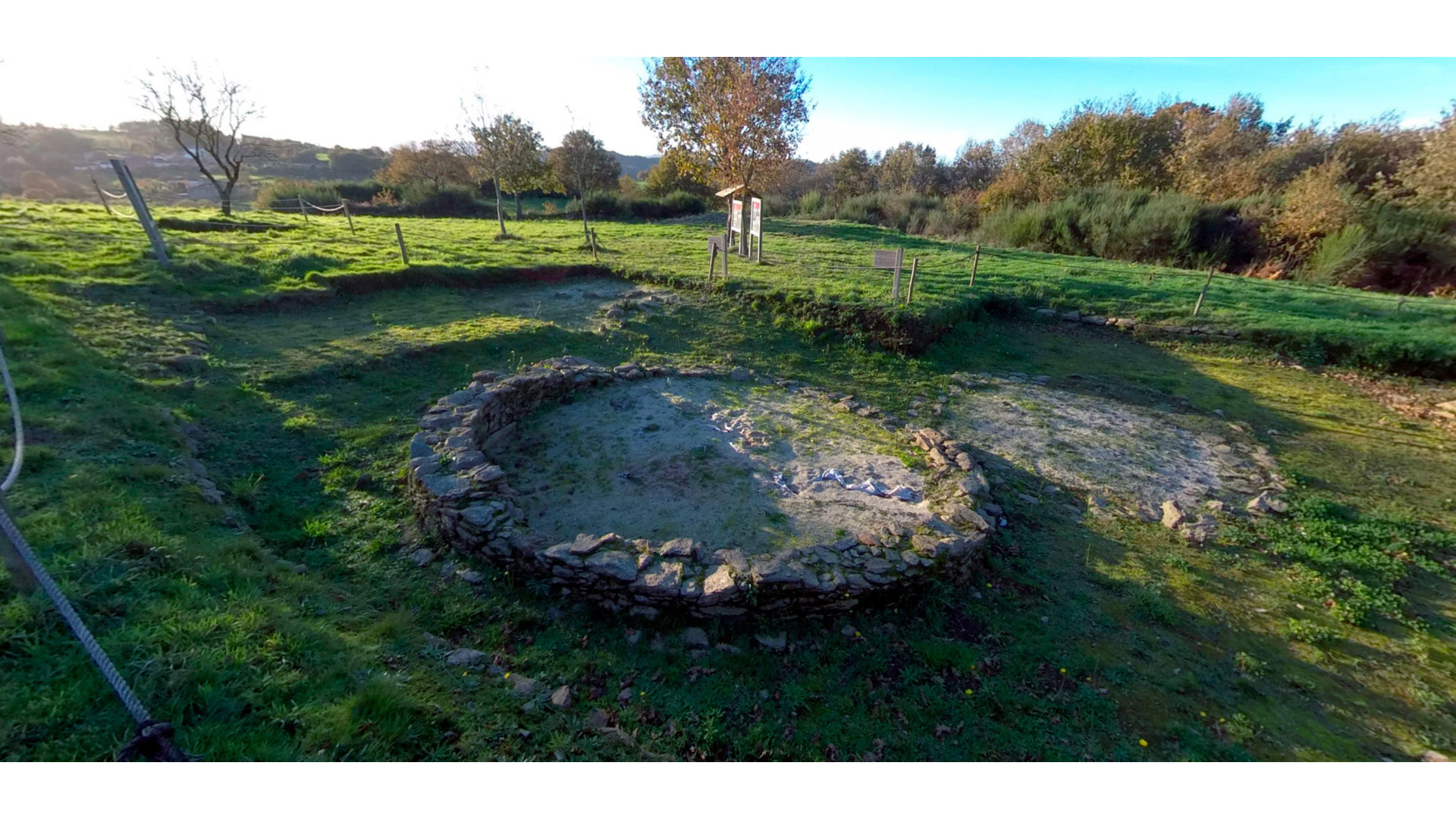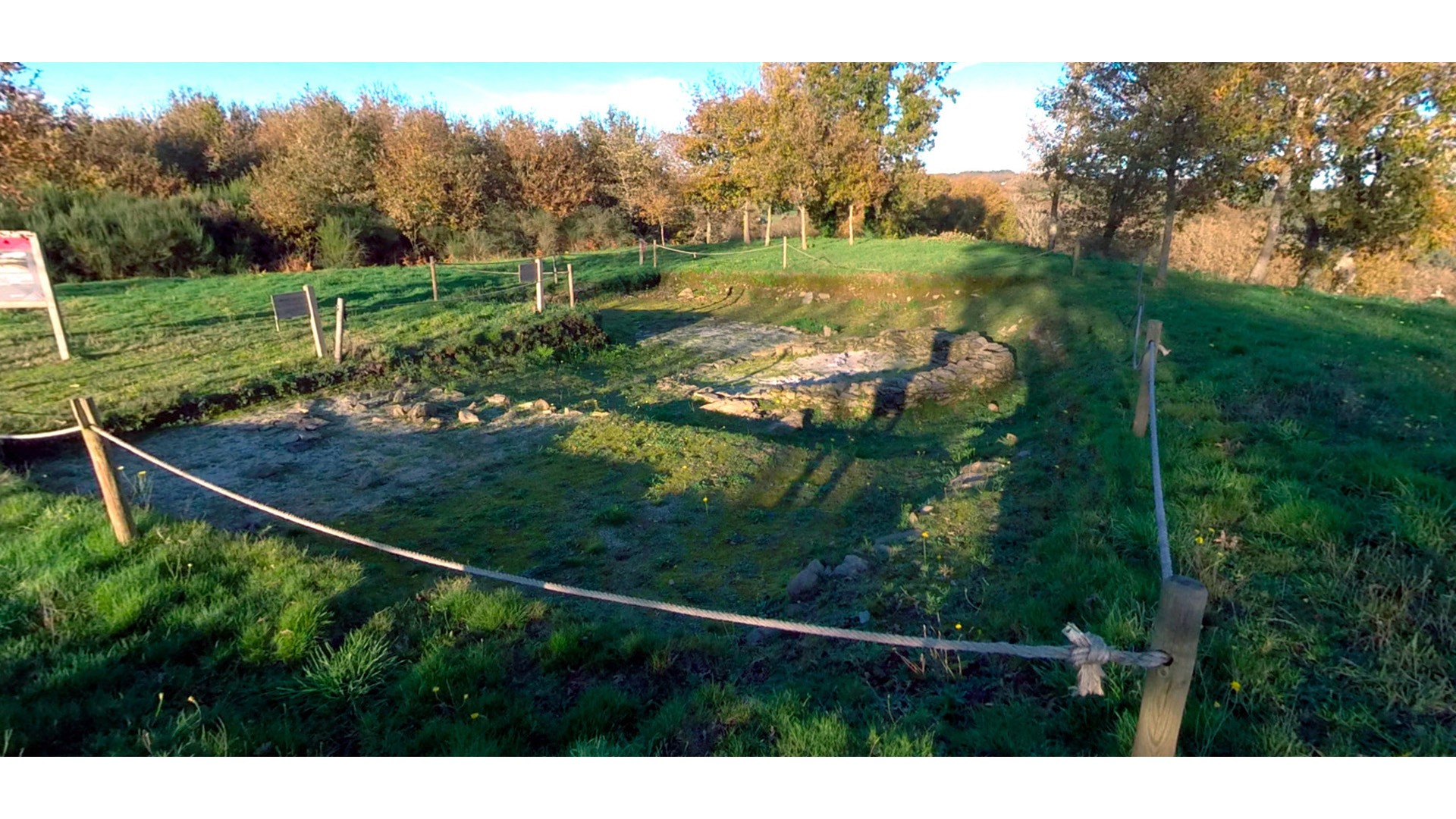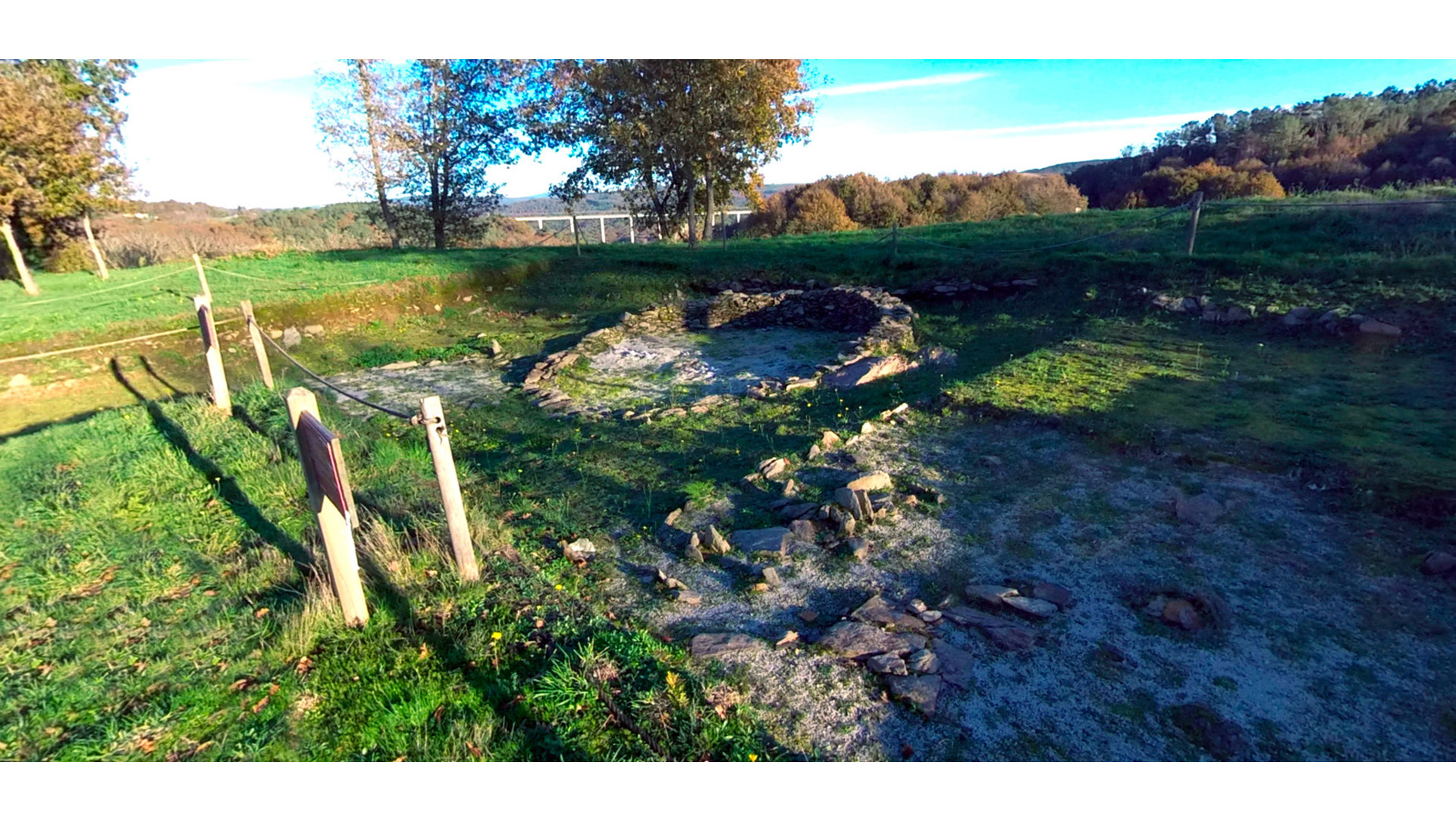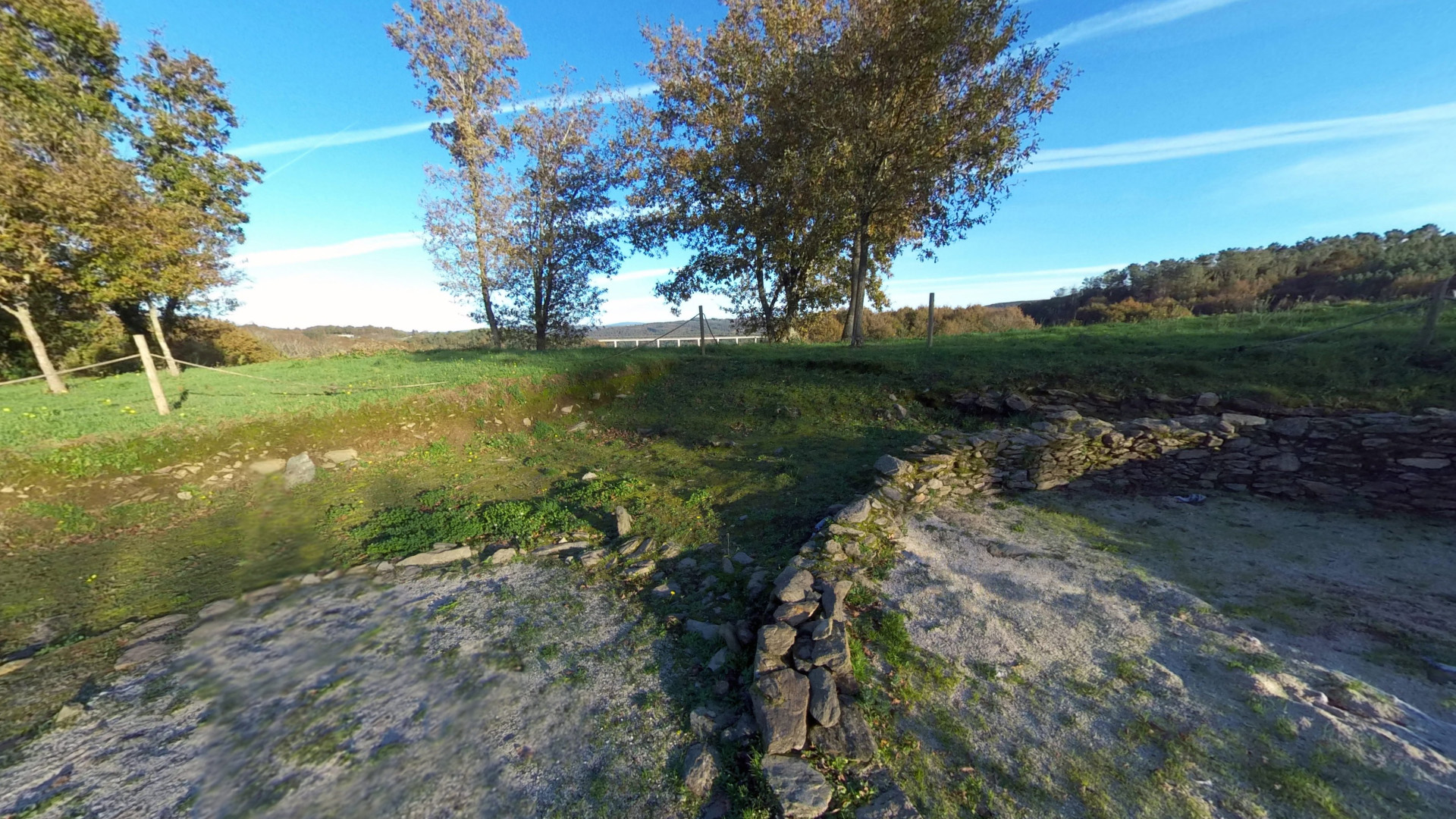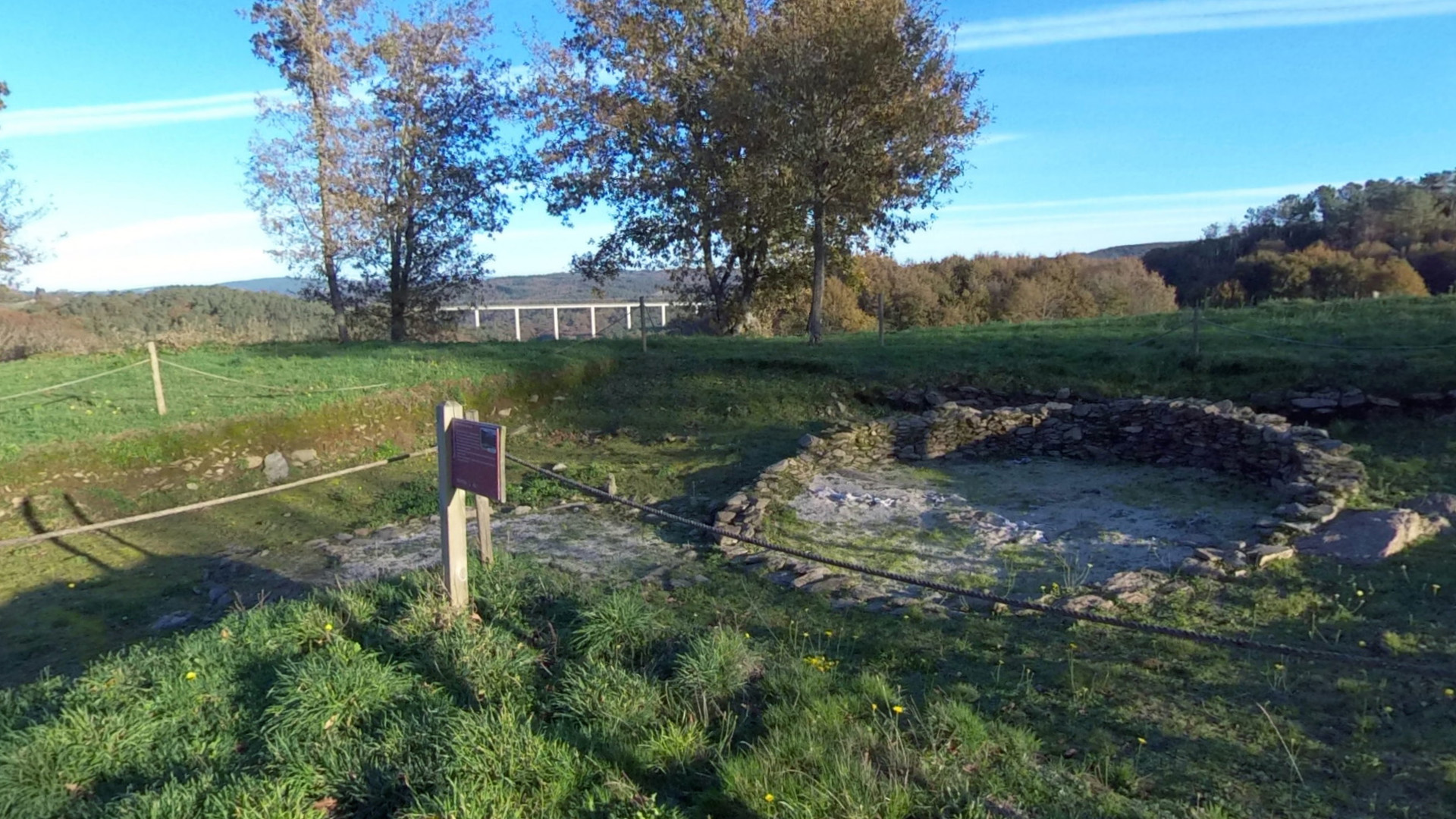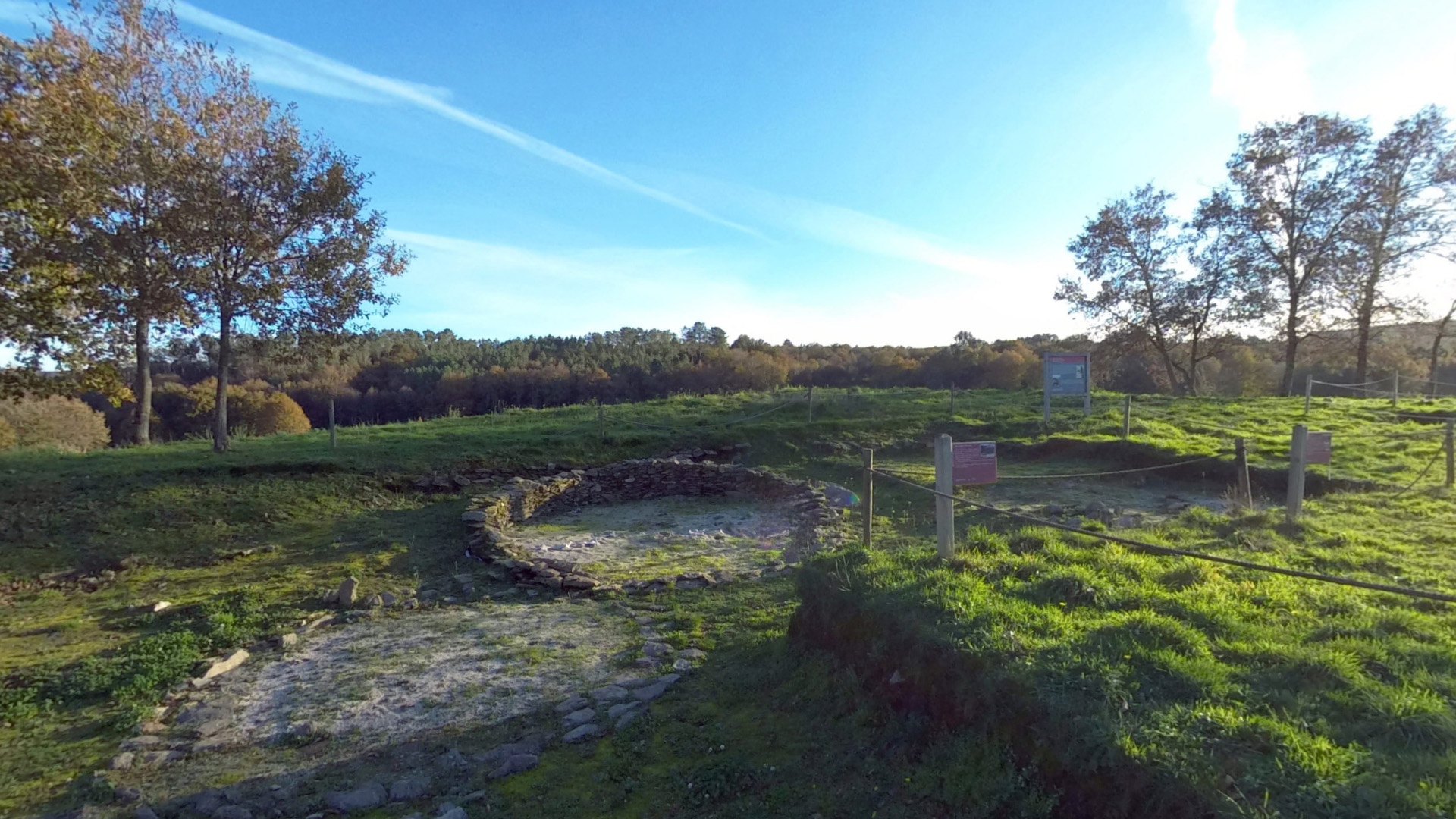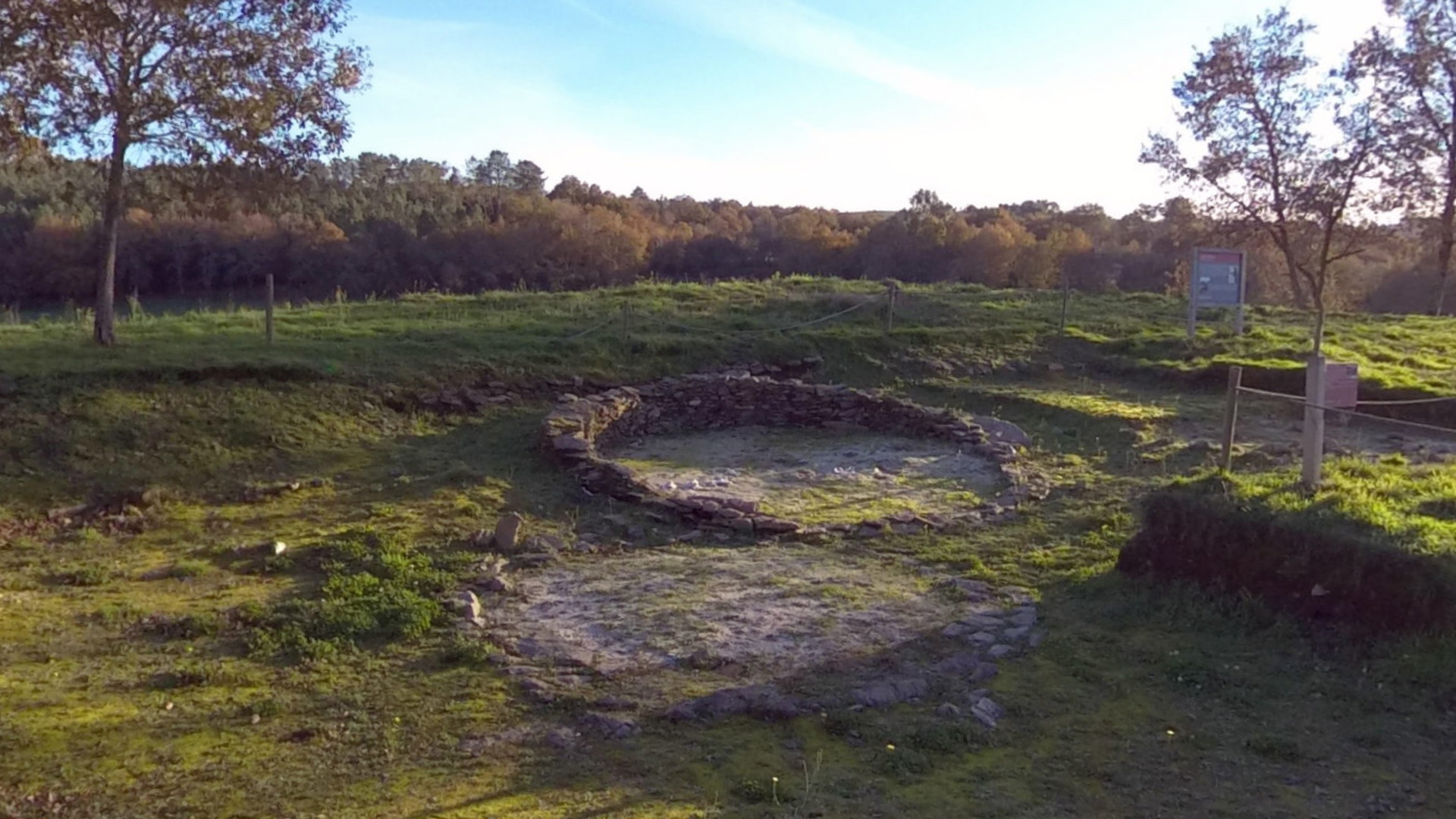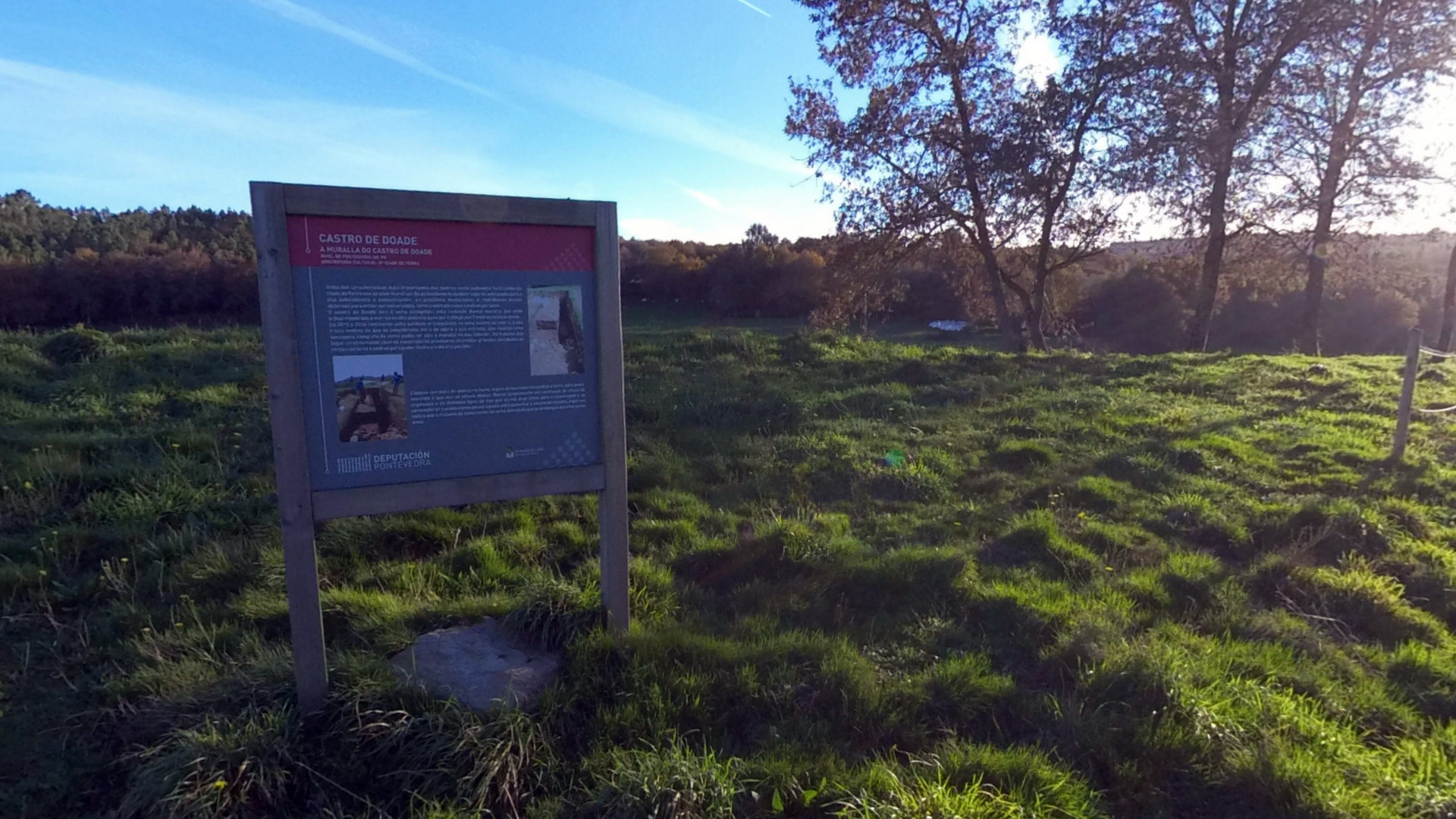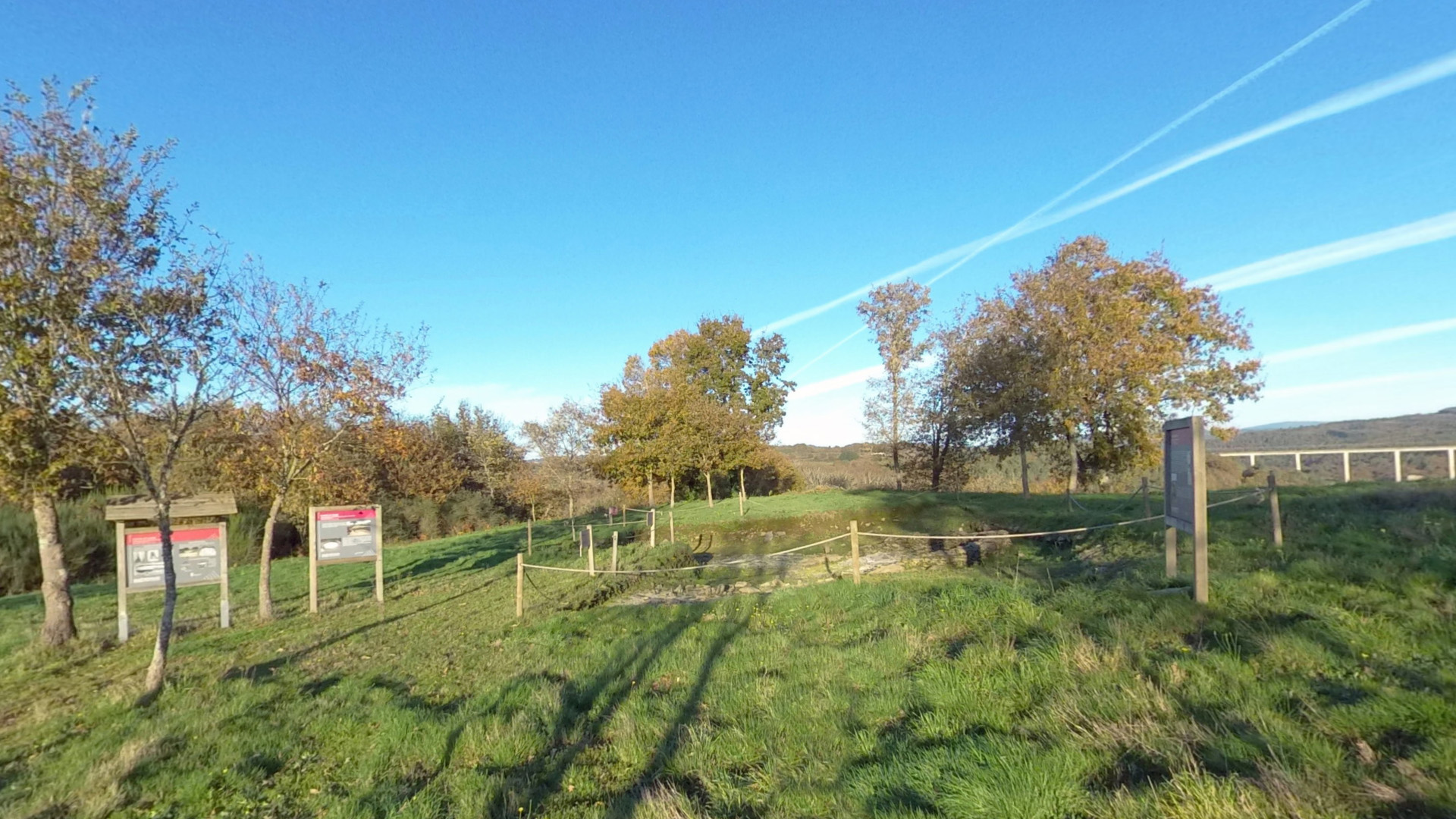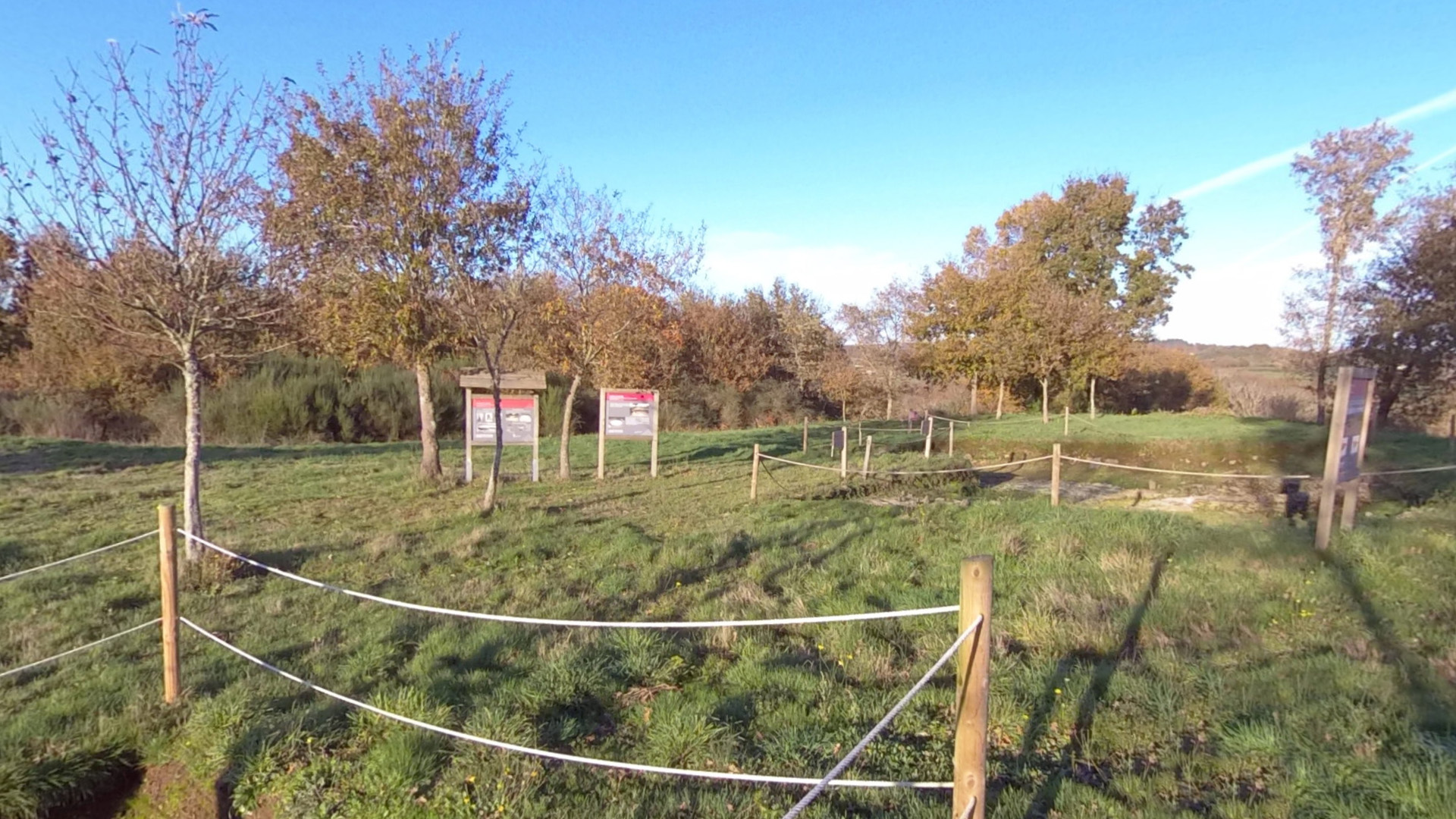
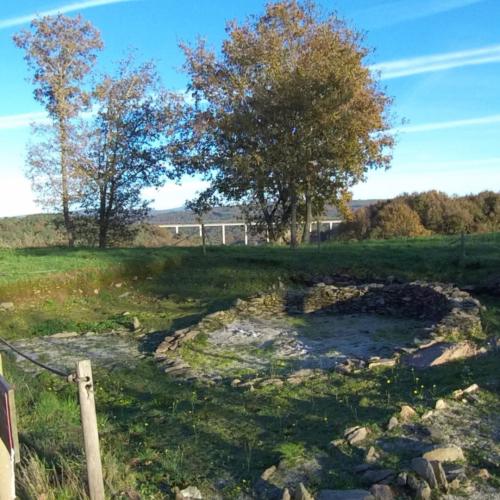
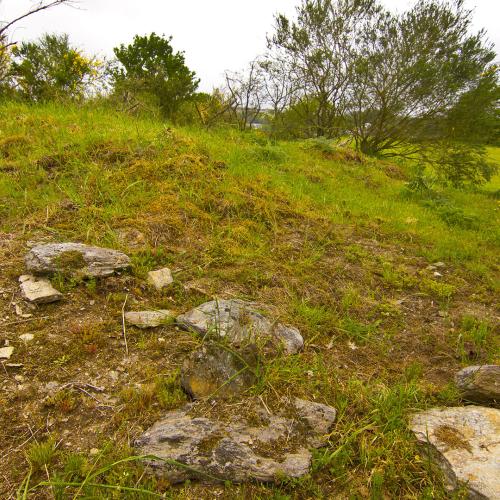
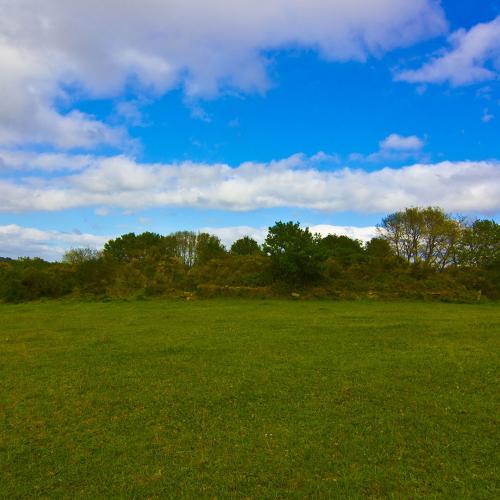
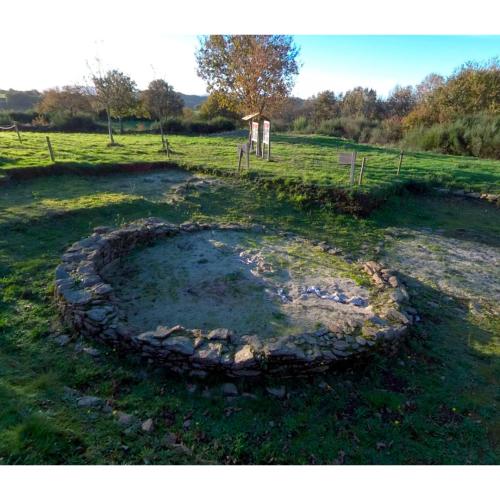
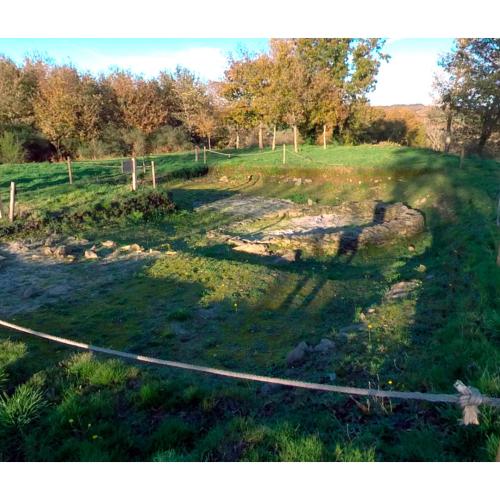
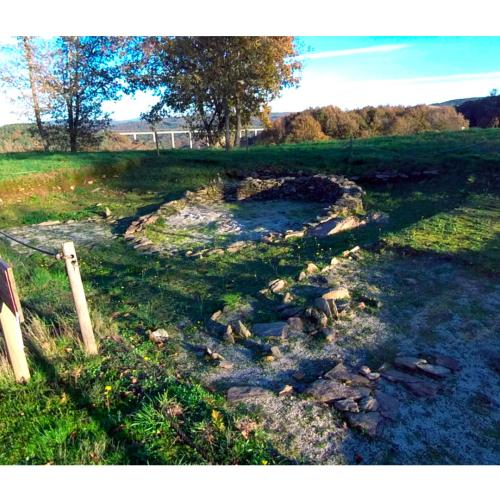
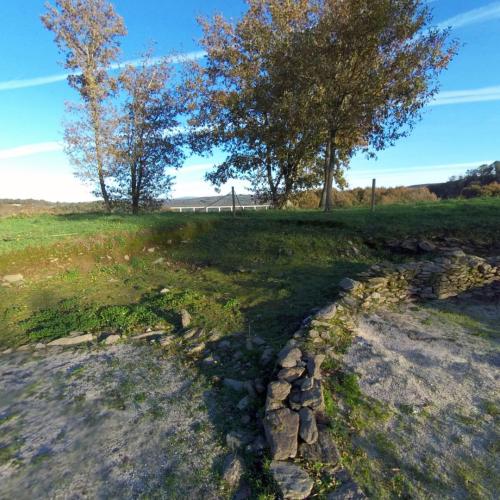
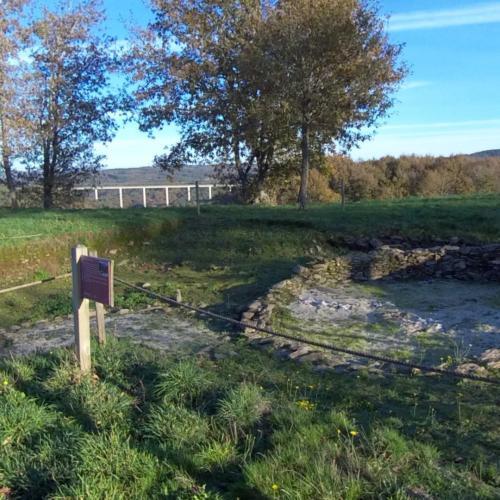
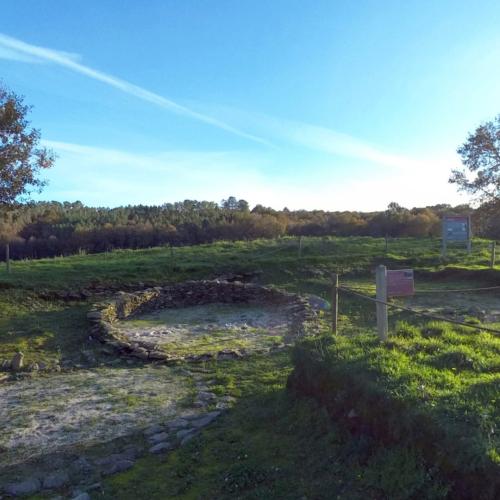
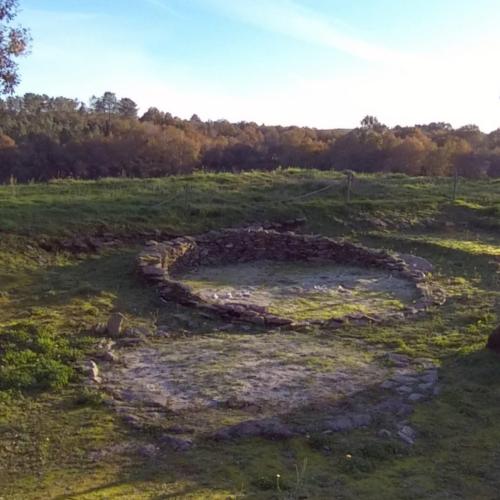
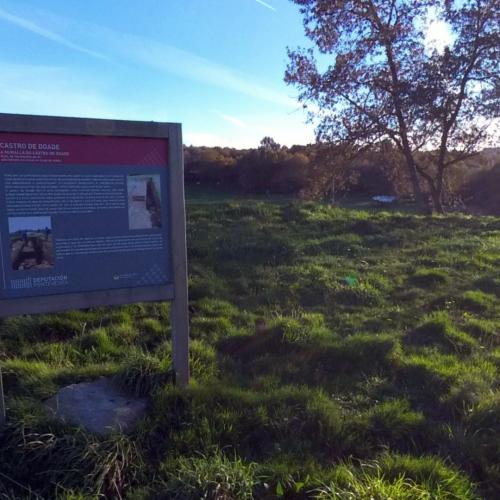
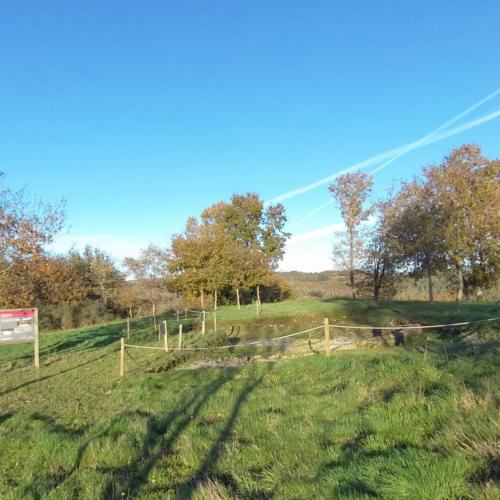
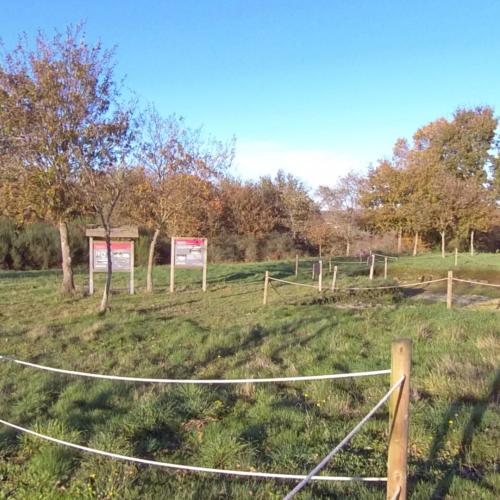
Castro de Doade Doade Hillfort is a fortified settlement from the Iron Age, located in the heart of inland Galicia. It is characterized by its hillside location and its almost circular layout, with a diameter ranging between 105 and 120 metres. It represents a typical example of Galician hillforts, where a settlement developed with houses, annexes and defensive structures, highlighting a double wall system accompanied by three outer ditches designed to protect the settlement.
Several archaeological campaigns of excavation, restoration and site enhancement have been carried out at the hillfort. These interventions have made it possible to recover, study and catalogue 24,700 archaeological pieces, including ceramics, stone and metal tools, as well as construction materials. These findings are preserved in the Archaeology Room of the Casa do Patrón Museum, located less than 600 metres from the site. This work has been essential for understanding the daily life, spatial organisation and defensive strategies of the hillfort’s inhabitants.
The occupation of Doade Hillfort spans from the 5th century BC to the 4th century AD, and is divided into four phases of settlement, the last already belonging to the Romanised period. Today, the site offers a complete and educational route that includes the hillfort’s crown and outer enclosure, the museum’s archaeology room and a full-scale replica of a hillfort dwelling. This itinerary allows visitors to gain a detailed insight into the way of life of its ancient inhabitants, providing a clear understanding of the history and culture of Galicia more than two thousand years ago. The site combines archaeological research, heritage interpretation and cultural dissemination, making it an important reference point for understanding the hillfort culture of inland Galicia.